
How to Perform Ghusl Nifas in Islam
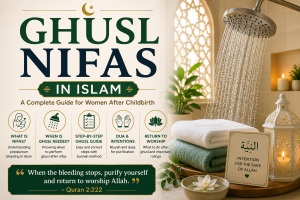
Ghusl Nifas in Islam: A Complete Guide for Women After Childbirth
Ghusl Nifas in Islam: A Complete Guide for Women After Childbirth. Childbirth is one of the greatest blessings Allah gives to a woman. It is a moment filled with joy, pain, sacrifice, tears, patience, and endless mercy from Allah. Islam honors mothers in a special way, and because of the physical and emotional changes women go through after delivery, Islamic teachings provide clear guidance about purity, worship, and recovery during this period.
One important topic many Muslim women search for is Ghusl Nifas. Some women are confused about when nifas starts, when it ends, how to perform ghusl after nifas, whether prayers become obligatory immediately, and what Islam says about the bleeding after childbirth.
This guide explains everything in a simple and human way so every Muslim woman can understand the rulings and spiritual wisdom behind ghusl after nifas.
Also Read: How to Bath After Menstruation in Islam
What Is Nifas in Islam?
Nifas in Islam. Nifas refers to the bleeding that comes from a woman after childbirth. In English, it is often called postpartum bleeding. This bleeding can continue for days or weeks depending on the woman’s body and recovery.
During nifas, a woman is excused from certain acts of worship such as:
- Salah (prayer)
- Fasting
- Tawaf around the Kaaba
- Sexual relations
This is not a punishment or a sign of impurity in a shameful sense. Islam recognizes the condition of women and gives mercy and ease during this period.
Allah says in the Qur’an:
“Allah intends for you ease and does not intend for you hardship.” — Surah Al-Baqarah 2:185
The postpartum period is physically exhausting. A woman may experience pain, weakness, sleepless nights, emotional stress, and recovery from delivery. Islam does not burden her beyond her ability.
Ghusl Nifas Niyat
Ghusl Nifas in Islam. One of the most common questions women ask is about the intention for ghusl after nifas.
In Islam, intention (niyyah) is made in the heart. You do not need to loudly pronounce it. Before starting ghusl, simply intend within yourself:
“I am performing ghusl to purify myself from nifas for the sake of Allah.”
That intention is enough.
The Prophet Muhammad ﷺ said:
“Actions are judged by intentions.” — Sahih al-Bukhari, Hadith 1
This famous hadith reminds Muslims that sincerity matters more than complicated words.
When Does Nifas Begin?
Nifas begins immediately after childbirth when the postpartum bleeding starts.
If a woman gives birth and there is no bleeding afterward, many scholars say she does not enter nifas and can pray normally after recovery and purification.
The bleeding may be:
- Heavy
- Light
- Red
- Brownish
- Spotting
All of this can fall under nifas if it is connected to childbirth.
How Long Does Nifas Last?
This is one of the most searched questions among Muslim women.
The maximum duration of nifas according to many scholars is 40 days.
Umm Salamah (RA) said:
“The women during the time of the Messenger of Allah ﷺ would sit for forty days after childbirth.” — Sunan Abu Dawud
However, not every woman bleeds for 40 days.
Some women stop bleeding after:
- One week
- Two weeks
- Twenty days
- Thirty days
The moment the bleeding completely stops, the woman should perform ghusl and return to prayer and worship.
She does not need to wait until 40 days if the bleeding has already ended.
Ghusl Nifas Steps
Performing ghusl after nifas is simple. Islam does not make purification difficult.
Below is the Sunnah method of ghusl.
1. Make the Intention
Begin with sincere intention in your heart.
You are purifying yourself from nifas to return to worship.
2. Say Bismillah
Say:
“Bismillah” (In the name of Allah)
3. Wash the Hands
Wash both hands three times.
4. Clean the Private Area
Wash away any impurity or traces of blood carefully.
5. Perform Wudu
Perform wudu like you do before prayer:
- Wash mouth
- Wash nose
- Wash face
- Wash arms
- Wipe head
- Wash feet
Some scholars say feet can also be washed at the end of ghusl.
6. Pour Water Over the Head
Pour water over the head three times and ensure it reaches the roots of the hair.
Women do not have to undo tightly braided hair unless water cannot reach the roots.
7. Wash the Entire Body
Wash the entire body completely.
Ensure water reaches:
- Behind ears
- Under arms
- Between fingers and toes
- Around the navel
- Every part of the body
Nothing should remain dry.
Ghusl Nifas Dua
There is no special authentic dua specifically for ghusl nifas.
However, after completing wudu during ghusl, a person may recite the normal supplication after wudu:
“Ashhadu an la ilaha illa Allah wahdahu la sharika lah, wa ashhadu anna Muhammadan ‘abduhu wa rasuluh.”
Meaning:
“I testify that there is no god except Allah alone without partner, and I testify that Muhammad is His servant and messenger.”
Ghusl Steps for Ladies
The ghusl process for women is not complicated. Sadly, many women grow up hearing cultural practices that make ghusl seem difficult.
Islam is simple.
The essentials are:
- Intention
- Water reaching the entire body
- Washing away impurity
Everything else is Sunnah and adds reward and beauty to the purification process.
Can a Woman Pray Before Ghusl After Nifas?
No. Once the nifas bleeding stops, ghusl becomes necessary before prayer.
A woman should perform ghusl as soon as reasonably possible after becoming pure.
After ghusl, she can return to:
- Salah
- Fasting
- Qur’an recitation
- Dhikr
- Islamic activities
Dua for Ghusl After 40 Days of Delivery
Some women continue bleeding close to forty days. Once the bleeding stops, they should perform ghusl and return to worship.
There is no special required dua specifically tied to “40 days.”
The important thing is sincere purification and returning to Allah with gratitude.
A mother can make personal duas such as:
“O Allah, grant me strength, health, and barakah in my child.”
Allah loves sincere supplication from the heart.
What Happens If Bleeding Continues Beyond 40 Days?
This is another common question.
According to many scholars, bleeding beyond 40 days may be considered irregular bleeding (istihadah) unless it matches a woman’s normal menstrual cycle.
In such cases:
- The woman performs ghusl after 40 days
- She resumes prayer
- She manages the bleeding similarly to irregular bleeding
However, because situations vary, it is always wise to consult a knowledgeable scholar or trusted Islamic teacher for personal cases.
Can Husband and Wife Be Intimate During Nifas?
No. Sexual relations are prohibited during nifas.
Allah says regarding menstruation:
“So keep away from women during menstruation and do not approach them until they are pure.” — Surah Al-Baqarah 2:222
Scholars apply similar rulings to nifas because postpartum bleeding also involves impurity and physical recovery.
Once the bleeding ends and ghusl is completed, intimacy becomes permissible again.
The Wisdom Behind Nifas in Islam
Some people see Islamic rulings only as restrictions, but when understood properly, they are acts of mercy.
Nifas gives women:
- Time to recover
- Physical rest
- Emotional healing
- Spiritual ease
- Freedom from religious burden during hardship
A new mother may be exhausted from:
- Delivery pain
- Lack of sleep
- Breastfeeding
- Hormonal changes
- Caring for a newborn
Islam understands human weakness.
Allah never asks a person to carry more than they can handle.
Emotional Struggles After Childbirth
Not every mother feels joyful immediately after birth.
Some women silently struggle with:
- Anxiety
- Fear
- Loneliness
- Postpartum sadness
- Emotional stress
Islam teaches compassion toward mothers.
The Prophet Muhammad ﷺ emphasized kindness toward women and mothers repeatedly.
A woman in nifas should never feel spiritually distant from Allah simply because she cannot pray temporarily.
She can still:
- Make dua
- Listen to Qur’an
- Do dhikr
- Seek forgiveness
- Send salawat upon the Prophet ﷺ
- Think good about Allah
Her reward continues.
Ghusl Nifas Shia
Among Shia Muslims, the general concept of ghusl nifas also exists, although some rulings and details may differ slightly from Sunni schools of thought.
The central idea remains the same:
- Postpartum bleeding requires purification
- Ghusl is necessary after bleeding ends
- Worship resumes afterward
For detailed jurisprudence, individuals should follow the rulings of their trusted scholars or madhhab.
Also Read: When is Islam Makhachev Next Fight
Common Mistakes Women Make During Nifas
1. Waiting Full 40 Days Even After Bleeding Stops
This is very common.
If the bleeding stops after 10 or 20 days, a woman should perform ghusl immediately and resume prayer.
She does not need to wait unnecessarily.
2. Thinking Nifas Makes Them Spiritually Dirty
Islam never humiliates women.
Nifas is a natural condition created by Allah.
It does not reduce a woman’s worth or closeness to Allah.
3. Delaying Ghusl Without Reason
Once purity is confirmed, ghusl should not be delayed carelessly.
Prayer becomes obligatory again after purification.
4. Following Culture Over Islam
Some cultural practices force unnecessary restrictions on women after childbirth.
Islam should always come before culture.
Can Women Read Qur’an During Nifas?
Scholars have different opinions.
Some scholars discourage direct touching of the mushaf during nifas unless necessary.
Others allow recitation from memory or digital devices.
Many scholars permit:
- Listening to Qur’an
- Reading translations
- Making dhikr
- Islamic study
Women should follow trusted scholarship they are comfortable with.
Spiritual Lessons From Nifas
The period of nifas teaches several deep lessons.
1. Human Weakness
A woman realizes how dependent humans are on Allah’s mercy.
2. Appreciation for Worship
Many women say they miss prayer deeply during nifas and appreciate salah more afterward.
3. Patience
Motherhood begins with sacrifice and endurance.
4. Mercy of Allah
Islam removes hardship during difficult moments.
That itself is mercy.
The Status of Mothers in Islam
Islam highly honors mothers.
The Prophet Muhammad ﷺ said:
“Paradise lies under the feet of mothers.” — Sunan an-Nasa’i
He also said:
“Your mother, then your mother, then your mother.” — Sahih al-Bukhari
Pregnancy, labor, nifas, sleepless nights, and raising children all carry immense reward.
Every pain a mother experiences is known by Allah.
Returning to Worship After Ghusl
Many women feel emotionally powerful after their first prayer following nifas.
It feels like returning home spiritually.
After ghusl, try to:
- Pray with gratitude
- Make dua for your child
- Thank Allah for safe delivery
- Ask Allah for righteous offspring
This is a beautiful moment between a servant and her Lord.
Practical Tips for Women During Nifas
Rest Properly
Do not ignore your body’s need for recovery.
Stay Spiritually Connected
Even without prayer, keep your heart attached to Allah.
Avoid Guilt
Allah Himself gave this concession.
There is no sin in being unable to pray during nifas.
Learn Authentic Knowledge
Reliable Islamic knowledge protects women from confusion and harmful myths.
Also Read: Seven Steps of Hajj
Ghusl Janabat and Ghusl Nifas Difference
Many people confuse the two.
Ghusl Janabat
Required after:
- Sexual relations
- Ejaculation
- Wet dreams
Ghusl Nifas
Required after postpartum bleeding ends.
The method of purification is very similar, but the causes are different.
Final Thoughts
Ghusl nifas is more than a physical bath. It marks the transition from postpartum recovery back into regular worship and daily acts of devotion.
Islam treats women with dignity, mercy, and understanding during this sensitive period. The rulings around nifas are not meant to burden women but to ease their difficulties and protect their health and spiritual well-being.
Every mother who goes through childbirth experiences a journey of sacrifice that Allah fully sees and rewards. Sleepless nights, pain, emotional struggles, and recovery are all known by Allah.
The moment a woman performs ghusl after nifas and returns to prayer, it becomes a beautiful reminder that purity in Islam is connected not only to the body but also to the soul.
May Allah grant ease to every mother, reward every woman for her patience, and bless Muslim families with righteous children and peaceful homes. Ameen.
About The Author
