
Handling Difficult Clients: Strategies That Actually Work
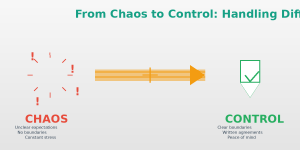
The Client From Hell (And How You Got There)
Handling Difficult Clients: Strategies That Actually Work. You took the project because the pay was good. Or because you needed the income. Or because red flags seemed like minor quirks at the time.
Now, three weeks in, you realize your mistake. The client:
- Changes requirements constantly without adjusting payment
- Sends urgent requests at midnight
- Blames you for problems they created
- Doesn’t pay on time (or hasn’t paid at all)
- Treats you like an employee, not a contractor
- Gives vague feedback that’s impossible to implement
- Threatens bad reviews if you don’t agree to unpaid additions
You’re stressed. You’re losing sleep. You’re dreading every email. And you’re wondering: Can I fix this? Should I fire them? How do I get out?
The good news: You have options. The better news: Most difficult clients can be managed—if you know how.
The Hard Truth: Not every difficult client can be saved. Some are impossible. But many difficult situations are caused by unclear expectations, poor communication, or boundaries you never set. Those? You can fix.
Also Read: Health Insurance for Freelancers
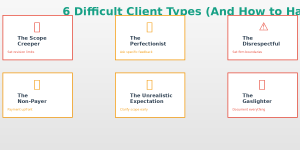
6 Types of Difficult Clients (And Why)
Type 1: The Scope Creeper
Starts with a defined project. Gradually adds more and more work. Never mentions budget adjustment. You end up doing 2x the work for the original price.
Why they do it: Often don’t realize they’re being unreasonable. See freelancers as flexible and unlimited. Don’t understand that scope expansion = more work = more cost.
How to identify: Their requests keep expanding. “While you’re at it…” becomes their favorite phrase.
Type 2: The Perfectionist
Nothing is ever good enough. Endless revisions. Vague feedback like “it doesn’t feel right” without explaining what that means. You’re chasing a moving target.
Why they do it: Usually uncertain about their own vision. Lack clear standards. Get lost in details instead of big picture.
How to identify: Request after request. Each revision gets closer to the original idea. They can’t articulate what they actually want.
Type 3: The Disrespectful One
Treats you like an employee or intern. Demands immediate responses. Sends emails at 2 AM with urgent requests. Blames you for their mistakes. Tone is dismissive or rude.
Why they do it: Don’t see contractors as professionals. View you as a commodity. Often insecure about their own position, so they assert dominance.
How to identify: Immediate feeling of discomfort. You dread their emails. They talk down to you or make unreasonable demands.
Type 4: The Non-Payer
Consistently late on payments. Makes excuses. Promises payment but delays indefinitely. You’ve delivered, they haven’t paid.
Why they do it: Cash flow issues, disorganization, or intentional avoidance. Sometimes genuinely can’t pay. Sometimes just testing if you’ll accept it.
How to identify: Invoices go unpaid. Follow-ups are ignored or met with excuses. You’re essentially lending them money.
Type 5: The Unrealistic Expectation Client
Wants professional results at amateur prices. Wants a month’s work completed in a week. Wants you to work for exposure or future payment that never comes.
Why they do it: Don’t understand freelance rates. Think what they saw on Fiverr applies to all freelancers. Genuinely underestimate project scope.
How to identify: Budget is too low from the start. Timeline is unrealistic. They compare you to cheaper alternatives constantly.
Type 6: The Gaslighter
Denies conversations happened. Claims you promised things you didn’t. Blames you for issues they caused. Manipulates through guilt or threats.
Why they do it: Usually intentional. Power play. Testing if you’ll accept responsibility for their mistakes. Sometimes psychologically manipulative.
How to identify: You feel crazy. You doubt your own memory. They claim you said things you didn’t. Conversations change in their retelling.
Early Warning Signs (Catch Them Before It’s Too Late)
Most difficult clients show warning signs before becoming problems. If you catch these early, you can:
- Set expectations before issues start
- Establish boundaries immediately
- End the project early before deep investment
- Clarify scope and budget upfront
| Warning Sign | What It Means | Action |
|---|---|---|
| Vague project description | They haven’t thought it through | Ask clarifying questions before starting |
| Budget is negotiable downward | Price-focused, may not value quality | Establish firm rates |
| Rushing to start without planning | Will likely rush you too | Insist on discovery phase |
| Unclear on who makes decisions | Will have approval chaos later | Identify single decision-maker |
| References other freelancers negatively | Pattern of blaming contractors | Pass or set strict boundaries |
| Demanding communication (urgent, frequent) | Will expect constant availability | Set communication schedule in contract |
Communication Strategies That Work
Strategy 1: Clarify In Writing
The #1 cause of client problems: assumptions. Client assumes something. You assume something different. Conflict results.
Solution: Get everything in writing before work starts.
EXAMPLE: Client says: “Can you do a logo in 3 weeks?” Your response: “Great! Let me confirm scope. Are you looking for: – Concepts: 3 or 5? – Revisions: How many rounds? – Deliverables: PNG, vector, or both? – Timeline: Final delivery in 3 weeks? Once you confirm, I’ll send a contract detailing all of this.”
Strategy 2: Set Expectations Early & Often
First communication, first email, first meeting: Set expectations about:
- Response time (you’ll reply within 24 hours, not instantly)
- Revision rounds included (3 rounds of revisions included, additional rounds $X)
- Scope boundaries (only deliverables listed in contract)
- Payment terms (50% upfront, 50% on delivery)
- Communication channel (email only, no Slack or WhatsApp demands)
- Decision timeline (need feedback within X days or we proceed with your original request)
Strategy 3: Use “Yes, and…” Framing
Instead of just saying no, reframe with “yes” first:
Bad: “No, that’s not included.”
Good: “Yes, I can do that. It’s outside the original scope, so it would be an additional project at my standard rate of $X.”
This keeps the client relationship positive while maintaining your boundaries.
Managing Scope Creep (Extra Work Without Extra Pay)
The Problem
Client: “Can you also add an email template?”
Client: “While you’re at it, can you design a social graphic?”
Client: “One more thing—can you write copy for the homepage?”
You’ve now done 3x the work for the original price.
The Solution: The Revision Rounds Framework
In your contract, specify exactly what’s included:
Example:
- Deliverable: 1 logo design
- Included: 2 rounds of revisions
- Revisions: Changes to existing concepts (size, color, styling)
- NOT included: Brand redesign, additional concepts, or new deliverables
- Additional rounds: $X per round
- New deliverables: Quoted separately at standard rates
Then when scope creep happens, you have the framework to address it:
Client: “Can you also add an email template?” You: “The current project includes 1 logo with 2 revision rounds. An email template is a separate deliverable. I can absolutely do that—it would be $500. Would you like to add it to the project?”
Now the client has a choice: Add it and pay, or stay within original scope.
Handling Vague Feedback & Unclear Requirements
The Problem: “It Doesn’t Feel Right”
Client: “Can you make it pop more?”
Client: “That’s not what I envisioned.”
Client: “I don’t like it, but I can’t explain why.”
You’re chasing a moving target with no map.
The Solution: Turn Vague into Specific
When you get vague feedback, dig for specifics:
Client: “I don’t like the color.” You: “I appreciate the feedback. To make sure I get this right, can you help me understand: – What about the color doesn’t work? Too bright? Too muted? – What color would feel better? – Are there examples of colors you like in other designs?”
This does two things: 1) Gets you useful information, 2) Shows client they need to be specific.
Payment Problems & Late Payers
Prevention (Better Than Collection)
1. Payment Upfront
50% before starting, 50% on delivery. This way, if they ghost, you’re not out much work.
2. Use a Contract
Specify payment terms, late fees, and what happens if they don’t pay.
3. Use Invoicing Tools
Send formal invoices (not random emails). Tools like Wave or FreshBooks track payments automatically.
4. Payment Terms in Writing
“Invoice due within 7 days. Late payments accrue $X per week.”
If They Don’t Pay
- Day 1-3: Follow up politely: “Hi, wanted to confirm you received the invoice. Let me know if you have any questions.”
- Day 7: More direct: “The invoice is now overdue. When can I expect payment?”
- Day 14: Firm: “This invoice is 7 days overdue. Please remit payment by [date] or I’ll [pause work/legal action].”
- Day 21: Do what you said. Stop work. Escalate if necessary.
Setting Boundaries Without Losing Clients
The Myth
Many freelancers think: “If I set boundaries, I’ll lose the client.”
The reality: You’re already losing the client. Difficult clients don’t become better—they get worse. The question isn’t whether you’ll lose them, but when.
Healthy Boundaries Examples
- Response time: “I respond to emails within 24 business hours.”
- Availability: “I don’t work weekends, but I’ll have your feedback Monday morning.”
- Scope: “That’s outside the agreed scope. I can add it as a separate project.”
- Respect: “I want to deliver great work, and that requires respectful communication.”
- Decisions: “If I don’t hear back by Friday, I’ll proceed with the original direction.”
Notice: These are firm but professional. They’re not rude. They’re not aggressive. They’re just clear.
Document Everything (Protect Yourself)
What to Keep
- Contracts & agreements: Every project should have written terms
- Email threads: Save all client communication
- Scope documents: What was agreed to in writing
- Change requests: If scope changes, document it
- Payment records: Invoices and payment confirmations
Why? If conflict escalates, you need proof of what was agreed to. Email is your friend here.
Scripts for Difficult Conversations
Script 1: “We Need to Realign”
“Hi [Client], I want to make sure we’re aligned on this project. Here’s what we agreed to [list original scope]. I’m noticing requests that are outside this scope [examples]. To deliver great work, I need to manage scope carefully. For anything outside the original agreement, I’m happy to discuss adding it as a separate project with its own timeline and budget. Does that work?”
Script 2: “I Need Clarification”
“I really want to get this right. Your feedback is valuable, and I want to make sure I’m implementing the right changes. Can you help me understand specifically what you’d like different? [Ask specific questions]. Once I have clarity, I’ll revise.”
Script 3: “We Need to Discuss Payment”
“I’ve noticed the payment is overdue [details]. I want to continue with our project, but I need to resolve this first. When can you send payment? If there’s an issue on your end, let me know and we can discuss it.”
When to Fire a Client (And How)
Red Flags It’s Time to End It
- You dread every communication
- They’ve been consistently disrespectful
- They refuse to pay or consistently pay late
- They gaslight you or deny conversations
- They’re causing you mental health stress
- Your boundaries have been ignored repeatedly
- The pay doesn’t match the hassle
How to Fire Them (Professionally)
“Hi [Client], I’ve enjoyed working with you, but I’ve realized that our working relationship isn’t the right fit. I want to be transparent about this rather than continue in a way that’s not optimal for either of us. I’m committed to finishing the current project [or: can provide you with your materials to transition to another freelancer]. I appreciate the opportunity to work together. I wish you all the best.”
Key points:
- Keep it professional
- Don’t blame them
- Finish the current project if possible
- Don’t leave them hanging mid-project
- Don’t vent or explain extensively
Recovering From a Nightmare Client
After dealing with a difficult client, you need to recover:
Immediately After
- Process the experience: What went wrong? What will you do differently?
- Update your process: Add contracts, screening questions, boundaries
- Take a break: Don’t jump to the next client immediately
- Get paid: Collect any outstanding payments
Long Term
- Screen better: Ask tougher questions upfront
- Trust your gut: If someone feels off initially, they’ll feel off throughout
- Raise your prices: Difficult clients aren’t worth your time unless they pay well
- Better boundaries: Apply what you learned to future clients
Also Read: Taxes for Freelancers
30-Day Difficult Client Action Plan
Week 1: Assess & Document
- Day 1-2: Identify current difficult clients
- Day 3-4: Document all communications and agreements
- Day 5: Categorize the difficulty type
- Day 6-7: Decide: Can this be salvaged or should they go?
Week 2: Have Conversations
- Day 8-9: Plan difficult conversation (if salvageable)
- Day 10: Have the conversation
- Day 11: Set new boundaries in writing
- Day 12-14: Monitor for improvement
Week 3: Update Your Process
- Day 15: Create or update your contract template
- Day 16: Write discovery/screening questions
- Day 17: Document your scope management framework
- Day 18-21: Test with next client
Week 4: Prevention
- Day 22: Fire clients if necessary (do it professionally)
- Day 23-25: Implement new boundaries with existing clients
- Day 26-28: Apply lessons to client screening
- Day 29-30: Recover and plan for better clients
30-Day Result: You’ll have addressed current difficult situations, improved your processes, and developed a system to avoid future problems.
Final Thought
You Have More Control Than You Think
Difficult clients feel like something that happens to you. They’re not. They’re usually the result of:
- Unclear expectations (solvable)
- Poor communication (solvable)
- Weak boundaries (solvable)
- No contract (solvable)
- Bad screening (solvable)
The truly impossible clients are rare. Most can be managed, improved, or transitioned out of—but you have to take action.
Remember: Your time and mental health are valuable. Difficult clients aren’t worth the cost. Either fix the situation, or end it professionally. Either way, you regain control.
About The Author
