
Getting Testimonials and Case Studies: Build Powerful Social Proof That Wins Clients
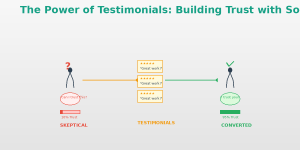
The Most Underutilized Asset for Freelancers
Getting Testimonials and Case Studies. You finish a project. Your client is thrilled. They pay you. And then… you never hear from them again.
You just wasted the most valuable asset you had: a happy client who would have gladly become your advocate.
Most freelancers never ask for testimonials or case studies. Not because they don’t know the value. But because asking feels awkward. Or they don’t know how to ask. Or they don’t know what to do with a testimonial once they get it.
This is a massive competitive advantage for you.
Here’s why testimonials and case studies matter:
- Trust builder: Prospects trust other clients more than they trust you
- Proof of results: Not claims—actual client experiences and outcomes
- Deal closer: Testimonials overcome objections better than your pitch
- Differentiation: While others don’t have them, you do
- Conversion multiplier: Good case studies can increase proposal acceptance by 30-50%
The Social Proof Reality: 92% of people trust recommendations from other people over any form of advertising. Your best marketing isn’t what you say about yourself. It’s what your happy clients say about you.
When to Ask (The Timing Matters)
Asking at the right time is 90% of getting a “yes.”
The Wrong Time to Ask
- During the project: They haven’t seen the final result yet
- Right after payment: They’re thinking about invoices, not happiness
- Months later: They’ve moved on; you’re no longer top of mind
- When they’re busy: They’ll say “later” and never come back
The Right Time to Ask
24-48 hours after delivery, when they’ve seen the result and are experiencing relief/excitement.
This is the sweet spot. They:
- Can see the actual deliverable (not a promise)
- Are experiencing the positive emotion of completion
- Feel gratitude (you solved their problem)
- Still remember the process (can speak to your work quality)
- Are in a generous mindset (happy with outcome)
The Ask Window
You have approximately 3-5 days after delivery when the client is most likely to say yes. After that, the emotional peak fades and other priorities take over.
Pro Tip: Build the testimonial request into your delivery process. When you deliver the final work, include a brief, warm follow-up asking if they’d be willing to share a quick testimonial. Make it feel like a natural part of the relationship, not an afterthought.
Also Read: The Art of Writing Winning Proposals: Land More Clients with Compelling Pitches
How to Ask Without Feeling Awkward
The key is to make it easy, specific, and optional.
The Formula
1. Thank them
“I’m so glad the project turned out well for you!”
2. Acknowledge the outcome
“I can tell this is going to help you [achieve their goal].”
3. Make the ask easy
“Would you be willing to share a quick testimonial about your experience working with me? Just a sentence or two is perfect.”
4. Give them an out
“No pressure at all if you’re too busy!”
Example Message
Subject: Thank you for working with me!
Hi [Client Name],
I’m thrilled to hear that you loved the final website redesign. You should see an uptick in qualified leads coming through—exactly what we targeted.
I’m building a portfolio of case studies, and I’d love to include your project. Would you be willing to share a brief testimonial about your experience? Even just 2-3 sentences about what made working with me different would be amazing.
No pressure at all if you’re busy. Either way, thanks again for the opportunity to work with you!
Best,
[Your Name]
Notice what this does:
- Acknowledges their success (not your success)
- Makes the ask simple (“brief,” “2-3 sentences”)
- Gives them an out (“no pressure”)
- Frames it as portfolio-building (not self-promotion)
Types of Testimonials That Work
Not all testimonials are created equal. Some are powerful. Others are weak.
Weak Testimonial
“Saheed was great to work with. I’d recommend him to others.”
Why weak? Generic. Could be about anyone. Doesn’t prove anything specific.
Powerful Testimonial
“Saheed redesigned our website and we saw a 40% increase in qualified leads within 2 months. He understood our target buyer better than we did and designed the site to speak directly to them. Best investment we made this year.”
Why powerful? Specific result. Clear outcome. Demonstrates understanding. Shows value.
What Makes a Testimonial Powerful
- Specific result or outcome: “40% increase in leads” not “better”
- Quotes the client’s own words: Not paraphrased or rewritten
- Includes their name, title, company: Adds credibility
- Addresses a specific challenge: “He understood our buyer” not generic praise
- Short and punchy: 1-2 sentences max
Extracting Testimonials From Hesitant Clients
Some clients want to give a testimonial but freeze when they sit down to write it.
Here’s how to help them:
The Question Approach
Instead of asking them to write a testimonial, ask them questions:
- “What was your biggest challenge before we started?”
- “What surprised you most about working with me?”
- “What results have you seen since the project launched?”
- “Would you hire me again? Why?”
- “What would you tell a friend considering hiring me?”
Record their answers (with permission). Then use their own words as a testimonial.
Example
You ask: “What surprised you most about working with me?”
They say: “Honestly? How fast you turned things around. We had a tight deadline and you hit every milestone without cutting corners. Most freelancers would have rushed it.”
You write: “Saheed turned around our entire project on a tight deadline without cutting corners. Every milestone was hit on time, and the quality never wavered. Most freelancers would have rushed it—he didn’t.”
Attribution: — Jane Smith, Marketing Director, TechCorp
Building a Powerful Case Study (6 Steps)
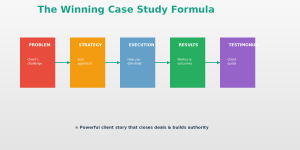
A case study is the next level. It tells the complete story of a project: problem, solution, results.
Step 1: Choose the Right Project
Not every project deserves a case study. Choose projects where:
- You achieved measurable results (not just “completed the work”)
- The client is willing to be featured (or at least anonymously)
- The work is representative of your best work
- There’s an interesting story (challenge, solution, outcome)
Step 2: Define the Problem
What challenge was the client facing?
Example: “TechCorp’s website was 4 years old and not converting visitors. They were getting 2,000 visits/month but only 5 qualified leads. They needed a modern site that spoke to their target buyer.”
Step 3: Explain Your Solution
What was your approach? What made it different?
Example: “Rather than a generic redesign, we conducted a 2-week discovery to understand their ideal customer profile. We mapped the buyer’s journey and designed the site to address objections at each stage. This required custom copywriting and strategic CTAs rather than template solutions.”
Step 4: Detail the Process
How did you execute? What steps did you take?
Example: “Week 1-2: Discovery and strategy. Week 3-4: Design and copywriting. Week 5: Development. Week 6: Testing and optimization. Week 7: Launch and follow-up.”
Step 5: Quantify the Results
What happened after? Use numbers whenever possible.
Example: “Post-launch metrics: 40% increase in qualified leads (from 5 to 7 per month), 35% improvement in average time on site, 28% increase in conversion rate from visitor to lead request.”
Step 6: Get Client Quote
End with a testimonial from the client about the experience and results.
Example: “The ROI was immediate. We paid for the site in the first month through increased leads. Saheed didn’t just build us a website—he built us a lead generation machine.” — CEO, TechCorp
The Case Study Template
CASE STUDY: [PROJECT NAME]
Client: [Company Name]
Industry: [Industry]
Timeline: [X weeks/months]
THE CHALLENGE
[Client’s situation + problem + goal]
THE STRATEGY
[Your unique approach + why it works for their situation]
THE EXECUTION
[Timeline of work + key milestones]
THE RESULTS
✓ [Metric 1: X increased/improved]
✓ [Metric 2: Y increased/improved]
✓ [Metric 3: Z increased/improved]
CLIENT QUOTE
“[Specific testimonial about the work and results]”
— [Name, Title, Company]
Where to Use Testimonials and Case Studies
Testimonials Work Best In
- Portfolio page: Show client feedback alongside each project
- Proposals: Include relevant testimonials in your pitch
- Home page: 3-4 rotating testimonials build immediate credibility
- About page: Client testimonials as proof of expertise
- Email signature: Brief testimonial in your signature
Case Studies Work Best In
- Dedicated case studies page: Full stories of your best work
- Proposals: A relevant case study can close a deal
- Email follow-ups: “Here’s a similar project I did…”
- LinkedIn articles: Expand case studies into thought leadership
- Sales conversations: Reference relevant case studies when pitching
Video Testimonials (The Most Powerful Format)
Written testimonials are good. Video testimonials are powerful.
Why? Because a person on video is real. They can’t be faked. Their body language, tone, and emotion all add credibility.
How to Get a Video Testimonial
Ask directly: “Would you be willing to do a 1-minute video testimonial? Super quick—just your thoughts on working together.”
Make it easy: “You can send it via WhatsApp or email. Doesn’t have to be professional—just authentic.”
Guide them: “Just answer these 2 questions: (1) What was your challenge before? (2) What’s changed since?”
The Power of Video
Video testimonials get 50%+ more engagement than text testimonials. If you have 2-3 good video testimonials, they become your most powerful marketing asset.
Video Tip: You don’t need professional quality. Authenticity beats polish. A client speaking naturally on their phone camera is more credible than a polished advertisement.
Organizing Your Social Proof
Once you have testimonials and case studies, organize them strategically.
By Niche/Industry
Group testimonials and case studies by the client’s industry. When you pitch to a SaaS company, show them testimonials from other SaaS companies. Relevance matters.
By Results Type
Organize by the outcome: Lead generation, revenue growth, efficiency improvements, etc. This way you can pull the most relevant testimonials for each type of prospect.
By Strength
Your strongest testimonials (with specific results + client name + credibility) should be easiest to access. Save generic testimonials for less prominent places.
Common Mistakes to Avoid
Mistake 1: Fake or Self-Written Testimonials
Problem: Writing testimonials yourself or making them up.
Why it fails: It shows. Prospects can tell. It destroys trust.
Fix: Only use real client testimonials. If you don’t have many, that’s okay. Build them over time.
Mistake 2: Generic Testimonials
Problem: “Great to work with. Highly recommend.”
Why it fails: Could be about anyone. No proof of specific value.
Fix: Ask clients for specific results or aspects they valued most.
Mistake 3: Testimonials Without Attribution
Problem: Testimonials with no name, no title, no company.
Why it fails: Looks fake. Lacks credibility.
Fix: Always include name, title, and company. Consider adding a photo.
Mistake 4: Burying Your Best Testimonials
Problem: Testimonials on a hidden page nobody visits.
Why it fails: Nobody sees them. Marketing value is zero.
Fix: Put them where prospects will see them: proposals, home page, portfolio.
Mistake 5: Not Asking at the Right Time
Problem: Asking for testimonials weeks or months after the project.
Why it fails: They’ve moved on. The emotional peak is gone.
Fix: Ask within 24-48 hours of delivery, when they’re happiest.
Critical Mistake: Not asking at all. This is the most common mistake. You have happy clients sitting around who would be willing to advocate for you. You just never ask.
Also Read: Building a Financial Safety Net: Emergency Fund for Freelancers
Building Your Social Proof Library
The best time to plant a tree was 20 years ago. The second best time is today.
Even if you don’t have testimonials yet, you can start building them now:
- Current projects: Ask for testimonials on your next 10 projects
- Past clients: Reach out to previous happy clients (they’ll say yes more often than you think)
- Best projects: Pick your 3-5 best projects and develop case studies
- Video testimonials: Ask your next 3 happy clients for a quick video
Within 3-6 months, you’ll have a library of social proof that becomes your most powerful marketing asset.
The Testimonial Advantage: While 90% of freelancers aren’t asking for testimonials, the 10% who do are getting 3-5X more clients. This isn’t complicated. It’s just an ask away.
About The Author
