
Burnout Prevention for Freelancers: Build Sustainable Energy
The Quiet Crisis Nobody Talks About
Burnout Prevention for Freelancers: Build Sustainable Energy. You’re booked solid for the next three months. Clients love you. Your income is the highest it’s ever been. You should be celebrating.
Instead, you’re exhausted. You dread opening your email. Projects that used to excite you feel like obligations. You snap at people you care about. You can’t remember the last time you took a day off.
This is burnout. And it sneaks up on freelancers because success looks the same as exhaustion.
Burnout isn’t a personal failure. It’s not laziness. It’s what happens when you push hard for too long without recovery. And if you don’t address it, it will cost you your business, your health, and your love of the work.
The Burnout Paradox: Burnout happens most often to the most dedicated, hardworking freelancers. The ones who care. The ones who say yes. The ones who push through. It’s not a sign you’re weak—it’s a sign you’ve been strong for too long.
What Burnout Actually Is
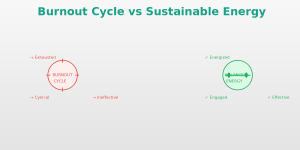
Burnout is chronic exhaustion from sustained high effort with insufficient recovery. It has three core components:
- Exhaustion: Depleted physical and emotional energy. You feel drained even after rest.
- Cynicism: Loss of enthusiasm for work. Tasks feel meaningless. You become detached and cynical.
- Reduced effectiveness: Your performance drops despite high effort. You can’t focus. Mistakes increase.
Burnout is not:
- Temporary tiredness (rest fixes that)
- A busy season (projects have end dates)
- Laziness or weakness (it’s a real condition)
- Something you can push through (pushing makes it worse)
Also Read: Overcoming Imposter Syndrome: Build Real Confidence
Why Freelancers Are Vulnerable
You Have No Built-in Boundaries
In a job, there are working hours. There’s a commute. There’s separation between work and life. As a freelancer, your home is your office. Work is always there. The boundary between “on” and “off” is invisible.
Income Insecurity Creates Constant Pressure
Each project could be your last. Each month is uncertain. So you work more to create a buffer. You say yes to everything. You can’t afford to turn down work. This creates a pressure that never stops.
You Are Responsible for Everything
In a job, other people handle marketing, accounting, HR, equipment. As a freelancer, that’s you. You’re not just doing the work—you’re running a business. This never-ending list of responsibilities is exhausting.
You Have No Built-in Support System
In a job, there are colleagues. There’s a team. There’s someone to ask questions. As a freelancer, you’re alone. You make all decisions. You solve all problems. There’s no one to share the load.
Success Looks Like Exhaustion
Being busy and successful are confused. You have more clients? That’s good. You’re working 60-hour weeks? That’s dedication. You can’t remember the last day off? That’s how you became successful. But this is the path to burnout, not success.
10 Warning Signs You’re Heading Toward Burnout
Sign 1: You Dread Client Communication
Emails and messages that used to feel like opportunities now feel like obligations. You delay responding. You feel anxiety when your phone buzzes.
What it means: You’ve lost the boundary between healthy work and over-extension. Your nervous system is treating communication as a threat, not a connection.
Sign 2: You’re Always “Too Busy”
Even when you’re not working, you’re thinking about work. You can’t fully relax. You say “I’m too busy” to friends, family, hobbies, self-care. Everything gets sacrificed for work.
Sign 3: You Work on Weekends and Evenings (Consistently)
One evening? Fine. A weekend project? Happens. But if weekends and evenings are regular work time, you have no recovery time. Your mind never fully leaves work mode.
Sign 4: You’ve Lost Interest in the Work Itself
The projects that excited you a year ago feel boring now. The work you chose because you loved it now feels like obligation. You’re going through the motions.
Sign 5: Your Productivity Is Declining Despite More Hours
You’re working more hours, but getting less done. You can’t focus. You’re making mistakes. You’re procrastinating on tasks. More work, less output = burnout signal.
Sign 6: You Feel Cynical or Resentful
Clients feel demanding. Projects feel pointless. You think about quitting. You feel resentful toward the work you chose. This cynicism is a core burnout symptom.
Sign 7: You Can’t Take Days Off Without Guilt
Even when you have a day off, you work. Or you feel guilty for not working. The idea of a full day away from work creates anxiety. Rest feels irresponsible.
Sign 8: Your Health Is Deteriorating
Sleep suffers. You get sick more often. Your digestion is off. You have headaches. Muscle tension. Physical symptoms of chronic stress.
Sign 9: You’re Irritable or Emotionally Distant
You snap at people easily. You’re emotionally drained from work, so you have nothing left for relationships. You withdraw from people you care about.
Sign 10: You Feel Trapped
You can’t imagine how to change the situation. You can’t reduce workload (need the income). You can’t take a break (too much backlog). You’re stuck. This feeling of being trapped is a major burnout indicator.
Physical & Mental Health Signals
Your body keeps score. When burnout is developing, your body sends signals:
| Physical Signs | Mental/Emotional Signs | Behavioral Signs |
|---|---|---|
| Sleep problems (insomnia, oversleeping) | Anxiety or persistent worry | Isolating from friends/family |
| Headaches or migraines | Depression or low mood | Neglecting self-care |
| Muscle tension or pain | Difficulty concentrating | Increased substance use |
| Frequent illness | Memory problems | Procrastination |
| Digestive issues | Loss of motivation | Perfectionism increases |
Set Non-Negotiable Boundaries
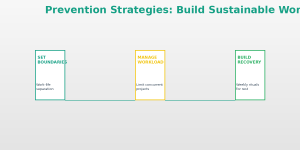
The most powerful burnout prevention is boundaries. Not just boundaries you have in theory, but boundaries you actually enforce.
Types of Boundaries to Set
- Time boundaries: “I don’t work weekends” or “I don’t respond to emails after 6pm”
- Availability boundaries: “I take one week off every quarter” or “I don’t take on more than 3 concurrent projects”
- Scope boundaries: “I don’t do revisions beyond my original estimate” or “Meetings are 30 minutes maximum”
- Communication boundaries: “I respond to emails within 24 hours” or “I’m not available by phone”
- Energy boundaries: “I only take high-paying projects” or “I decline projects that drain me”
The key: Don’t set boundaries you won’t keep. Better to have one boundary you actually enforce than 10 you break. Start with one critical boundary for you.
Manage Your Workload (Not Just Time)
Time management isn’t the solution to burnout. You can be “efficient” and still burned out. The real solution is workload management—controlling how much you take on.
Audit Your Current Workload
For one week, track:
- How many projects you have
- How many hours you work per day
- Which tasks drain you vs. energize you
- How much admin/non-billable work you do
- When you feel most overwhelmed
Set a Maximum Workload
Decide the maximum number of projects you can handle without exhaustion. For many freelancers, it’s 3-4 concurrent projects. Some can handle 2. Some could handle 5. Know your number and stick to it.
Say No More Than You Say Yes
If you’re burned out or heading there, every new opportunity costs something. Before saying yes, ask: “What would I have to give up for this?” If the answer is sleep, health, or relationships, the answer is no.
Energy Management (Not Just Productivity)
Productivity metrics don’t capture energy. You can be productive and still depleted. The goal is sustainable energy—maintaining your ability to do good work.
Identify Your Energy Drains
Not all work is equal. Some tasks energize you. Some drain you. Some clients energize you. Some drain you. Some types of communication (meetings, emails, calls) drain you.
Track for one week: Which activities energize you? Which drain you? Then protect the energizing ones and minimize the draining ones.
Build Recovery Into Your Week
Recovery isn’t just vacation. It’s built into your weekly rhythm. You need:
- One full day per week with no work
- Evenings free from work (at least 4 per week)
- Activities that recharge you (exercise, nature, creative hobbies, time with people)
- Adequate sleep (7-9 hours)
Build Recovery Rituals Into Your Week
Recovery isn’t something you do when burned out. It’s something you do to prevent burnout. Weekly recovery rituals:
Morning Ritual (10-15 minutes)
Start your day grounded, not reactive. This might include:
- Meditation or breathing exercises
- Journaling your intentions for the day
- Stretching or light exercise
- Reading something inspiring (not work-related)
End-of-Day Ritual (5-10 minutes)
Consciously end work, not just stop when exhausted:
- Review what you accomplished (no matter how small)
- Write down tomorrow’s three priorities
- Close your laptop/workspace physically
- Change clothes or take a walk to mark the transition
Weekly Ritual (2-4 hours)
One full day or evening dedicated to recovery:
- No work at all (this is non-negotiable)
- Activity that recharges you (not passive like TV)
- Time in nature, with people you love, or on a hobby
- Rest that feels restorative, not guilty
Learn to Say No Without Guilt
Burnout happens to people who say yes. Prevention requires learning to say no.
Practice These Scripts
“I’m at capacity right now. I can’t take on this project.”
No explanation needed. No apology.
“This doesn’t fit my current priorities. I’d recommend [referral].”
Show you care by referring someone else.
“My rate is $X. At that rate, I can take this on in [timeline].”
Let price be the boundary if timing is the issue.
“I’m not the right fit for this project.”
You don’t have to take everything you’re capable of doing.
The guilt paradox: You feel guilty saying no to projects. But if burnout happens, you’ll have to say no to everything—your business, your relationships, your health. A no now prevents a bigger no later.
Diversify Income to Reduce Pressure
Income insecurity drives overwork. When you live project-to-project, you work desperately. When you have stable income, you can turn down bad opportunities.
Create Income Stability
- Retainer clients: Predictable monthly income reduces panic
- Passive income: Products, templates, or digital assets create income without hourly work
- Multiple income streams: Don’t depend on one client or project type
- Emergency fund: 3-6 months of expenses let you turn down desperate work
The goal: Reach a place where you work because you want to, not because you have to.
Find Your Sustainable Pace
Burnout prevention is about finding the pace you can maintain forever, not the pace you can push for one season.
The Sustainability Question
For any work arrangement, ask: “Can I do this for the next 5 years?”
- If the answer is no, it’s not sustainable.
- If you’re already exhausted, it’s definitely not sustainable.
- If it requires you to sacrifice important relationships or health, it’s not sustainable.
The 80/20 Rule for Sustainable Work
- 80% of your time: work you’re good at (sustainable)
- 20% of your time: building, growing, learning (healthy challenge)
- 0% crisis mode (if you’re in crisis mode, you’re not sustainable)
Also Read: Handling Difficult Clients: Strategies That Actually Work
If You’re Already Burned Out: Recovery Plan
If you’re reading this and you’re already burned out, prevention is too late. You need recovery.
Step 1: Acknowledge It (Week 1)
Stop pretending you’re fine. Tell someone. Your burnout isn’t a personal failure—it’s a signal that something needs to change.
Step 2: Reduce Workload Immediately (Week 1-2)
This might mean:
- Postponing projects
- Delegating or outsourcing tasks
- Declining new work
- Taking a week off (even if it feels irresponsible)
Critical: You can’t rest while maintaining the same workload. Something has to change immediately.
Step 3: Build in Real Recovery (Week 2-4)
- Sleep 8+ hours per night
- Take one full day off per week with no work
- Do something restorative daily (walk, meditation, hobby)
- Spend time with people you love
- Consider talking to a therapist or counselor
Step 4: Restructure Your Business (Week 4+)
Once you’ve recovered enough to think clearly, restructure to prevent relapse:
- Set maximum workload (and keep it)
- Build boundaries into your business model
- Diversify income if needed
- Hire help or outsource (don’t try to do everything)
- Review quarterly to prevent relapse
Recovery takes time: Burnout doesn’t develop overnight, and recovery takes weeks to months. Be patient with yourself. The goal isn’t to get back to the old pace—it’s to build a better, sustainable business.
The Real Cost of Burnout (And Prevention)
Burnout costs you more than you think:
- Health: Chronic stress causes real health problems
- Relationships: Isolation and irritability damage connections
- Work quality: Your best work comes from a clear mind, not exhaustion
- Income: Burnout reduces productivity, which reduces income
- Business viability: You can’t run a business if you’re not functional
Prevention is the best strategy. It’s cheaper than recovery. It’s easier than recovery. It’s faster than recovery.
Remember: Your business exists to serve your life, not the other way around. The goal is a sustainable freelance career that energizes you, not one that exhausts you. Burnout prevention isn’t laziness—it’s the most professional thing you can do for your business.
About The Author
