
Upwork vs Fiverr vs Other Platforms: Which is Best for Your Niche?
Upwork vs Fiverr vs Other Platforms: Which is Best for Your Niche?
Choosing the right freelance platform is one of the most consequential decisions you’ll make early in your career. Different platforms attract different clients, have different fee structures, and favor different service types. Pick the wrong one and you’ll struggle. Pick the right one and opportunities flow in.
Why Platform Choice Matters
A freelancer is not platform-agnostic. The platform you choose determines: what clients see you, how much you earn after fees, how easy it is to raise rates, your ability to build direct relationships, and ultimately your long-term business trajectory. A designer thriving on Upwork might struggle on Fiverr. A copywriter excelling on specialized platforms might never get traction on generalist marketplaces. Understanding the differences is essential.
This guide compares the major platforms, shows the pros and cons of each, and helps you identify which platforms fit your specific niche and income goals.
Also Read: Personal Branding for Freelancers: Build Your Online Presence
The Major Platforms Compared
Upwork: The Generalist Marketplace
Best for: Designers, writers, programmers, virtual assistants, consultants. Clients range from startups to Fortune 500 companies. Wide range of budgets.
Pros: Largest client base, higher average budgets, clients accustomed to paying professionals, project diversity, ability to negotiate rates, strong reputation system, time and material tracking tools available.
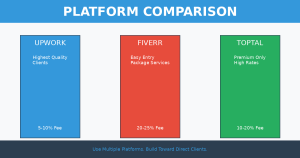
Cons: 5-10% platform fees, fierce competition (especially for beginners), bidding system favors lower rates initially, client quality varies significantly, algorithm changes affect visibility, requires constant job applications.
Earnings potential: $20-300+ per hour depending on specialization and reputation. Top-rated freelancers consistently command premium rates.
Best approach: Build reputation on smaller projects first, then transition to retainers with premium rates. Most sustainable income comes from direct client relationships, not constant bidding.
Fiverr: The Service-Based Marketplace
Best for: Designers, video editors, social media managers, voice actors, illustrators. Works better for service packages than hourly work. Smaller projects and quick turnarounds.
Pros: Passive income potential (gigs sell 24/7), no bidding required, built-in audience, portfolio visibility is automatic, good for beginners building reviews, quick payments, lower barrier to entry.
Cons: Higher fees (20-25%), lower average budgets, race-to-the-bottom pricing culture, less control over rates, algorithm-dependent visibility, difficult to raise prices, platform owns the client relationship.
Earnings potential: $15-200 per gig depending on service and reputation. Income is limited by number of gigs available and your willingness to work at Fiverr’s price points.
Best approach: Use Fiverr to build reviews and experience early on. Once you have solid reputation and reviews, transition to Upwork or direct clients at higher rates. Fiverr is a stepping stone, not a destination.
Specialized Platforms
Toptal (Premium developers/designers): Highly vetted talent, higher budgets ($80-150+ per hour), small client base, strict acceptance criteria. Best if you’re experienced and can pass screening. Lowest competition, highest earning potential.
99designs (Design): Contests, design marketplace, high visibility for design work. Lower rates than Upwork. Useful for building portfolio quickly. Mix of good and bad clients.
Guru (Generalist): Similar to Upwork but less crowded. Lower fees (8-10%). Smaller client base. Worth having profile on, but doesn’t replace Upwork.
PeoplePerHour (UK/European focused): Good for freelancers targeting European clients. Similar model to Upwork. Smaller platform with less competition.
Shopify/Etsy Partner Programs: If you create digital products, services, or templates, these platforms have built-in audiences actively buying.
For writers specifically: Medium (publishing + monetization), Substack (newsletters), Ghost (independent blogs). These platforms pay differently—some offer revenue share, some flat fees. Writers earn more here than on generalist marketplaces because it’s not a bidding war.
Platform Comparison Table
| Platform | Fees | Best For | Avg. Budget | Ease of Entry |
|---|---|---|---|---|
| Upwork | 5-10% | Most services | $500-5,000 | Moderate |
| Fiverr | 20-25% | Package services | $25-500 | Easy |
| Toptal | 10-20% | Dev/Design | $3,000-25,000 | Hard |
| 99designs | Variable | Design | $300-3,000 | Easy |
| Guru | 8-10% | Most services | $400-3,000 | Easy |
Choosing Your Platform Strategy by Niche
Logo Design & Branding
Best choice: Upwork + 99designs. Upwork for retainers and repeat clients. 99designs for portfolio building and exposure. Combine both to maximize visibility and client diversity.
Content Writing & Copywriting
Best choice: Upwork + Substack/Medium. Upwork for client work, retainers, and income. Medium/Substack for publishing your own content and building audience for future clients.
Web Design & Development
Best choice: Upwork → Toptal. Start on Upwork to build reputation. Once you have strong track record, move to Toptal for higher budgets and better clients. Upwork remains supplement income.
Virtual Assistance
Best choice: Upwork. The most common VA platform. Build reputation, find retainer clients, then transition to direct relationships. Fiverr not ideal for VAs.
Social Media Management
Best choice: Fiverr + Upwork. Fiverr for monthly management packages. Upwork for project-based work and retainers. Both work, but combine for maximum income.
Specialized Services (Consulting, coaching, niche skills)
Best choice: Toptal or niche platforms. General platforms undervalue specialized expertise. Toptal, Catalant (for consultants), or industry-specific platforms will attract higher-paying clients.
The Platform Progression Strategy
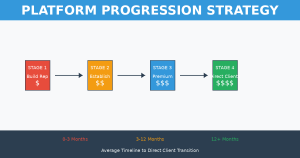
Most successful freelancers follow this progression: Stage 1 (Building reputation): Fiverr or Upwork starter projects. Accept lower rates to build reviews. Apply to every relevant job. Collect testimonials. Stage 2 (Establishing yourself): Move to Upwork, raise rates, target better clients. Build consistency. Get repeat clients. Stage 3 (Premium positioning): Transition to Toptal or niche platforms. Establish direct client relationships. Raise rates aggressively. Stage 4 (Long-term): Primarily direct clients, use platforms as supplements. Own your client relationships. Command premium rates.
This progression takes 12-24 months typically. The goal is always to get off platforms eventually—they take fees, control your rates, and own your client relationships. But early on, they’re invaluable for finding consistent work.
Multi-Platform Strategy: Why You Should Use Multiple
Advantage 1: Income diversification. If one platform changes its algorithm and you lose visibility, your income doesn’t evaporate. Spread across 2-3 platforms protects you.
Advantage 2: Different client types. Upwork attracts corporate clients. Fiverr attracts solopreneurs and small businesses. 99designs attracts design-conscious companies. Each platform brings different opportunities.
Advantage 3: Portfolio building. Work on one platform builds reputation and reviews that help you on others. A strong Upwork profile helps you get accepted to Toptal, for example.
Advantage 4: Rate negotiation power. If you’re booked on Upwork and Fiverr, you can raise rates or decline low-paying work. Platforms can be leveraged against each other.
Recommended approach: Start with one platform (usually Upwork). Once you have 5+ positive reviews and understand the system, add a second platform. Once earning consistently, add a third or build direct client pipeline. Never rely on a single platform.
Red Flags on Any Platform
Low-budget clients: If you’re consistently getting inquiries for $50 projects when you want to charge $1,000, your profile positioning is wrong or you’re bidding on wrong jobs. Adjust targeting or raise minimum project prices.
Constantly losing bids: You’re competing on price or your proposal isn’t compelling. Stop bidding lower. Write better proposals. Target fewer, higher-quality opportunities. Bidding 50 times and winning none is worse than bidding 5 times and winning 3.
Platform changes killing visibility: Algorithms change constantly. If your income drops 50% after an algorithm update, you need to: refresh your profile, update portfolio, change targeting, or diversify to other platforms. Don’t just accept it.
Fee changes: If a platform increases fees significantly, consider shifting energy to other platforms or direct clients. High fees reduce your effective hourly rate.
Building Toward Direct Clients
Every successful freelancer eventually targets direct clients—they’re more profitable, longer-term, and you control the relationship. Platforms are stepping stones. Once you’ve built: Portfolio of 5+ strong projects, Consistent 5-star reviews, Clear positioning and pricing, Network in your niche, you should actively build direct client pipeline. Platforms should become 20-30% of income with direct clients as 70-80%.
Direct clients come from: Referrals from existing clients (most common), LinkedIn networking, your website/portfolio attracting inbound, industry events and networking, content marketing, email outreach, professional communities. These require effort but pay significantly better and create business stability.
Also Read: Client Communication: Red Flags and How to Handle Difficult Clients
Your Platform Selection Action Plan
This week: Identify your primary niche and research which platforms dominate it. Talk to freelancers in your niche about their platform mix.This week: Set up profiles on your top 2 platform choices. Optimize them fully—they’re your storefront.Week 2: Apply for 10-20 relevant projects/jobs on your primary platform. Track which clients engage and which ignore you.Month 1-3: Build reputation and reviews. Focus on completing projects excellently, not maximizing income.Month 3: Once you have 3+ positive reviews, start raising rates and being more selective about projects.Month 6: Add a second platform or start building direct client pipeline.Month 12+: 50% of income from platforms, 50% from direct clients. Eventually reverse this ratio.
Final Thoughts
No single platform is “the best.” The best platform is the one where your ideal clients spend their time and where you can command rates that sustain your lifestyle. For most, that’s Upwork. For designers, it might be 99designs or Toptal. For writers, it might be specialized publications or Substack. Use these platforms as launching pads, not destinations. Build reputation, collect testimonials, then transition to direct clients where you’ll always earn more.
About the author: Based on years of active freelancing across Upwork, Fiverr, and direct client work. This guide reflects real experience with platform dynamics, income progression, and the transition from platform-dependent to client-owned business model.
About The Author
