
What Is Dhul Hijjah in Islam?
What Is Dhul Hijjah in Islam: The Most Sacred Month of the Year
The Month That Stands Above All Others
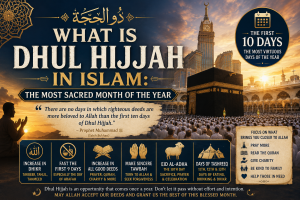
What Is Dhul Hijjah in Islam: The Most Sacred Month of the Year. If you ask most Muslims which month is the most important in the Islamic calendar, the instinctive answer is Ramadan. And in terms of fasting and the spiritual intensity of that particular act of worship, Ramadan holds its own unique status. But the Prophet, peace be upon him, said something that stops many people in their tracks when they first hear it properly. He said that there are no days in which righteous deeds are more beloved to Allah than the first ten days of Dhul Hijjah. The companions asked, not even jihad in the path of Allah? He said, not even jihad in the path of Allah, except for a man who goes out with his life and his wealth and returns with neither.
That hadith, narrated in Sahih Bukhari, tells you almost everything you need to know about the standing of Dhul Hijjah in Islam. These are not ordinary days. They are not simply the days when Hajj happens. They are, according to the Prophet himself, the most virtuous days of the entire year for doing good deeds. Understanding what Dhul Hijjah is, what it contains, and what a Muslim is supposed to do during it is not optional religious knowledge. It is something every Muslim should carry with them clearly.
What Dhul Hijjah Means and Where It Falls
Dhul Hijjah is the twelfth and final month of the Islamic lunar calendar, the Hijri calendar. Its name in Arabic literally means “the possessor of Hajj” or “the month of pilgrimage,” which tells you immediately what this month is associated with. It follows Dhul Qa’dah, which is the eleventh month, and it comes after the month of Ramadan by roughly six months in the lunar year.
Because the Islamic calendar is lunar and not solar, Dhul Hijjah moves through the Gregorian calendar each year, arriving approximately eleven days earlier than the year before. This means that over a lifetime, a Muslim will experience Dhul Hijjah in every season and every part of the Gregorian year. In 2026, the first ten days of Dhul Hijjah fall in late May and early June, making the current moment one where this extraordinary month is either approaching or already upon us.
The month has twenty-nine or thirty days depending on the moon sighting, and within those days sit some of the most important events and acts of worship in all of Islam.
Alao Read: Prayer for the Dead in Islam: Salatul Janazah and Dua for the Deceased
The First Ten Days: The Most Virtuous Days of the Year
The hadith already quoted makes the status of the first ten days of Dhul Hijjah clear. But why are these ten days so elevated? Scholars have pointed to several reasons.
First, these are the days in which the five pillars of Islam converge more than at any other time. The shahada is always present. Salah continues through these days. Zakat is not restricted to any season but many Muslims give it during this period. Fasting is done on the Day of Arafah specifically. And Hajj, the fifth pillar, is performed during this exact period. No other ten days in the year see the convergence of all five pillars in this way.
Second, Allah Himself swore by these days in the Quran. In Surah Al-Fajr, Allah says: “By the dawn. And by the ten nights.” The majority of scholars of Quranic exegesis, including Ibn Abbas and Ibn Katheer, hold that “the ten nights” refers to the first ten nights of Dhul Hijjah. When Allah swears by something in the Quran, it is a mark of that thing’s importance and nobility.
Third, the Day of Arafah, the ninth of Dhul Hijjah, is the day about which the Prophet said that fasting it expiates the sins of two years: the past year and the coming year. No other single day of voluntary fasting in the entire Islamic year carries that level of expiation.
What to Do During the First Ten Days of Dhul Hijjah
The question in the screenshot that reads “dhul hijjah what to do” is one of the most practically important questions a Muslim can ask. The answer is comprehensive because these days accommodate every kind of good deed.
Increase in Dhikr
The Prophet instructed Muslims to increase in tahleel, which is saying La ilaha illallah, tahmeed, which is saying Alhamdulillah, and takbeer, which is saying Allahu Akbar, during these ten days. This is based on the narration of Ibn Umar that the Prophet said to increase in tahleel, tahmeed, and takbeer during these days. The takbeer is especially prominent from the first of Dhul Hijjah through to the last day of Tashreeq, the thirteenth of Dhul Hijjah. It is Sunnah to say the takbeer aloud in the markets, in the mosques, in the streets, and in the home. Men say it aloud. Women say it quietly.
The form of takbeer most narrated from the companions is: Allahu Akbar, Allahu Akbar, la ilaha illallah, Allahu Akbar, Allahu Akbar, wa lillahil hamd.
Fasting the First Nine Days, Especially the Day of Arafah
It is recommended to fast as many of the first nine days as possible. The ninth, the Day of Arafah, is the most important of these. For Muslims who are not performing Hajj, fasting on the Day of Arafah is one of the greatest acts of worship they can perform. The Prophet described it as expiation for two full years of sins. No other single day carries this level of expiation through fasting alone.
There is no fasting on the tenth of Dhul Hijjah itself because that is Eid Al-Adha, and it is forbidden to fast on the days of Eid.
Increasing in All Good Deeds
The hadith in Sahih Bukhari does not specify any particular deed as being the best during these days. It says righteous deeds in general are more beloved to Allah during this period than at any other time. This means that prayer, giving charity, reading Quran, visiting relatives, being kind to parents, helping those in need, learning Islamic knowledge, and any other act of worship or goodness carries extra weight during these ten days. A Muslim should treat these days the way they treat the last ten nights of Ramadan: as an opportunity that comes once a year and cannot be wasted.
Making Sincere Tawbah
These days are also a time for sincere repentance. Muslims are encouraged to turn to Allah with genuine regret for their shortcomings, renew their commitment to their obligations, and ask for forgiveness from anyone they may have wronged. Tawbah during these elevated days is especially encouraged.
The Day of Arafah: The Crown of the Ten Days
The ninth of Dhul Hijjah, known as Yawm Arafah or the Day of Arafah, is considered the pinnacle of the entire Islamic year by many scholars. For the Hajj pilgrims, it is the day they stand on the plain of Arafah from after Dhuhr until sunset, making dua, reciting the talbiyah, and seeking forgiveness. The Prophet said that Hajj is Arafah, meaning the standing on Arafah is the core and heart of the entire pilgrimage. A pilgrim who misses this standing has missed Hajj entirely.
For non-pilgrims, this day is marked by fasting and increased worship. The Prophet described Allah descending to the nearest heaven on this day and boasting of the pilgrims to the angels, asking what they want and what they are seeking. He said that on no other day does Allah free more of His servants from the Fire than on the Day of Arafah.
The dua that the Prophet said is the best dua on the Day of Arafah is: La ilaha illallahu wahdahu la sharika lah, lahul mulku wa lahul hamdu wa huwa ala kulli shay’in qadeer. This is a declaration of Allah’s oneness and His absolute power and praise.
Eid Al-Adha: The Tenth of Dhul Hijjah
The tenth of Dhul Hijjah is Eid Al-Adha, the Festival of Sacrifice, which is considered the greater of the two Eids in Islam. It commemorates the willingness of Prophet Ibrahim, peace be upon him, to sacrifice his son Ismail in obedience to Allah’s command, and Allah’s mercy in replacing the sacrifice with a ram at the last moment. This event is referenced in Surah As-Saffat.
On this day, Muslims who are financially able perform the udhiyah, the ritual sacrifice of a livestock animal such as a sheep, goat, cow, or camel. The meat is divided into three portions: one for the family, one for friends and neighbors, and one for the poor. The sacrifice is not obligatory according to the Shafi’i and Maliki schools, but is a confirmed Sunnah at minimum. The Hanafi school holds it to be obligatory for those who are financially capable and not performing Hajj.
The Eid prayer is performed on the morning of the tenth, before the sacrifice takes place. Fasting on this day is forbidden.
Also Read: How to Perform Ghusl Janabah
The Days of Tashreeq: The Eleventh, Twelfth, and Thirteenth
The days do not end with Eid. The eleventh, twelfth, and thirteenth of Dhul Hijjah are known as Ayyam al-Tashreeq, the Days of Tashreeq. Fasting on these days is forbidden. They are days of eating, drinking, and remembering Allah. The takbeer continues through these days, and for the Hajj pilgrims, these are the days they spend in Mina performing the stoning of the Jamarat, the symbolic stoning of the devil.
The Prophet said that these days are days of eating and drinking and remembering Allah. Muslims are encouraged to maintain the spirit of worship and gratitude from the first ten days through the days of Tashreeq.
Dhul Hijjah and Those Not Performing Hajj
A point worth making clearly is that the significance of Dhul Hijjah is not limited to those who are performing Hajj. The vast majority of Muslims around the world do not perform Hajj in any given year. The elevated status of these days and the rewards associated with them are accessible to every single Muslim regardless of whether they are in Makkah or anywhere else in the world.
The non-pilgrim participates in Dhul Hijjah through fasting, especially on Arafah, through dhikr and takbeer, through the udhiyah sacrifice on Eid Al-Adha, through increased prayer and Quran recitation, through charity, and through the Eid prayer and celebration. The spiritual geography of these days extends to every Muslim on earth, not only those who are physically present at the holy sites.
Dhul Hijjah in 2026
Based on the Islamic calendar, Dhul Hijjah 1447 is expected to begin around late May 2026, placing the Day of Arafah around late May or early June, and Eid Al-Adha shortly after. Muslims should verify the moon sighting announcement from their local Islamic authority or a trusted national body, as the precise start date depends on the sighting of the new moon.
Do Not Let These Days Pass Without Intention
The tragedy for many Muslims is that Dhul Hijjah passes the way other months pass: without awareness, without preparation, and without deliberate action. Ramadan has a cultural momentum that carries people along even when their personal discipline is weak. Dhul Hijjah requires more intentionality because the culture around it is less developed in many Muslim communities outside of the context of Hajj and Eid.
Make the intention now. Plan to fast at least the Day of Arafah. Commit to saying the takbeer after every prayer and in your daily life through these ten days. Give some charity. Read some Quran. Pray two extra rakahs before sleeping. These are not extraordinary demands. They are ordinary acts of worship performed in extraordinary days, and the Prophet himself told you that there are no days in which those acts are more beloved to Allah than these.
That is not an invitation to be taken lightly.
About The Author
