
Pyarelal Ramprasad Sharma Biography: The Legendary Career of Bollywood’s Master Arranger
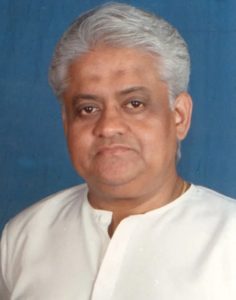
Pyarelal Ramprasad Sharma Biography
Pyarelal Ramprasad Sharma Biography: The Legendary Career of Bollywood’s Master Arranger
Pyarelal Ramprasad Sharma Biography. The golden era of Indian cinema was defined heavily by its music. Songs were not mere commercial insertions; they were the emotional soul of the narrative, carrying stories across generations. At the absolute apex of this musical renaissance stands Pyarelal Ramprasad Sharma, one-half of the legendary composer duo Laxmikant–Pyarelal. For more than three and a half decades, this partnership delivered some of the most enduring melodies, complex orchestral arrangements, and background scores in the history of Hindi cinema.
Pyarelal was not just a songwriter or a music director; he was a brilliant violin virtuoso, an accomplished piano player, a master orchestrator, and a conductor of global stature. His work bridged the gap between traditional Indian ragas and massive Western classical symphonies, redefining what a Bollywood orchestra could sound like.
Formative Years, Family Lineage, and Demanding Musical Education
Pyarelal Ramprasad Sharma was born on September 3, 1940, in Bombay (now Mumbai) during the twilight years of British India. He entered a world thoroughly steeped in rich musical heritage. His father, Pandit Ramprasad Sharma—highly regarded within the musical community under the nickname “Babaji”—was a deeply esteemed trumpet player, music instructor, and classical theorist.
. Babaji was highly active in the music recording scenes of the 1940s and 1950s, serving as an initial source of inspiration and instruction for his children.
Growing up under the strict eyes of an expert classical musician meant that Pyarelal’s introduction to notes and rhythms began almost as soon as he could speak. When he turned eight years old, his father introduced him to the violin. What followed was an intense period of discipline that sounds near-impossible by modern standards. The young boy was expected to practice his instrument for anywhere between eight to twelve hours every single day. This uncompromising daily discipline developed flawless physical reflexes alongside a highly sophisticated theoretical understanding of tone, harmony, and composition.
Recognizing the boy’s immense natural gift, his father sought out advanced instruction for him. Pyarelal became a student of the legendary Goan musician Anthony Gonsalves. Gonsalves was a foundational figure in Indian film music history, a man who taught western classical violin and arrangement structures to many future greats. Under his guidance, Pyarelal mastered the mechanics of the Western staff notation system and orchestral arrangement. Decades later, Pyarelal would pay a immortal tribute to his mentor by composing the hit song “My Name Is Anthony Gonsalves” for the movie Amar Akbar Anthony (1977), immortalizing his teacher’s name in pop culture history.
Also Read: Biography of Loyola Mani: The Rise of TVK’s Orator and Tamil Nadu’s Education Reformer
Economic Hardships and the Recording Studio Grinds
Despite his father’s respected status as a scholar and musician, the family faced severe financial adversity. By the time Pyarelal was ten years old, the financial stability of the household had deteriorated significantly. The young prodigy had no choice but to step out into the commercial world to help keep his family afloat.
He began working as a session violinist in various recording studios around Bombay, spending a vast amount of time working out of the historic Ranjit Studios. By the age of twelve, he was a regular fixture in recording rooms, playing intricate string parts under the baton of early cinematic masters like C. Ramchandra, Naushad, and Khayyam. Working as a teenage session musician provided him with an unconventional but unparalleled education. He observed how different directors interacted with singers, how microphones were placed to capture sound, and how acoustic spaces impacted the final mix of a track.
During this adolescent phase, Pyarelal also expanded his musical horizons outside the film industry. He joined the Bombay Chamber Orchestra and studied at the Paranjoti Academy to deepen his familiarity with Western classical music. His talent was so pronounced that his deepest career aspiration at the time was to pack his bags, move to Europe, and audition for a permanent spot in the world-renowned symphony orchestra in Vienna. However, destiny had an entirely different path mapped out for him, and that path was deeply tied to a young mandolin player named Laxmikant Kudalkar.
Crossing Paths with Laxmikant and the Genesis of a Legendary Partnership
Laxmikant and Pyarelal first crossed paths during their childhood days at the Sureel Kala Kendra, a music academy meant for young children from families with limited financial means. Laxmikant came from a background of deep poverty in Vile Parle and played the mandolin, while Pyarelal was the serious violin player. Despite differences in their temperaments, they recognized a shared survival instinct and an identical passion for musical perfection. They became close friends when Laxmikant was around eleven and Pyarelal was just nine.
The two boys began executing music together, performing in small-scale local concerts and classical instrumental events to earn meager amounts of pocket money. As they grew older, they began working as a cohesive assistant unit. They joined the prominent music director duo Kalyanji-Anandji as assistants, helping them arrange complex musical tracks for successful films like Chhaliya (1960). They also did extensive arrangement and session work for Sachin Dev (S.D.) Burman and helped Rahul Dev (R.D.) Burman with his debut project as an independent director, Chhote Nawab (1961).
When Pyarelal seriously considered moving to Vienna to pursue his classical symphony dreams, it was Laxmikant who intervened. Laxmikant convinced his friend that their combined talents could revolutionize the Indian film industry, and that they should stick together to form an independent composing team. Pyarelal agreed, and the historic entity known as Laxmikant–Pyarelal (fondly abbreviated as L-P) was born.
Ascent to Fame, Impact of Parasmani and Dosti
The duo received their first official break as independent music directors with the 1963 fantasy film Parasmani. The film was a modest production, but the soundtrack was an instant sensation. Songs such as the poignant duet “Wo Jab Yaad Aaye” (rendered by Lata Mangeshkar and Mohammad Rafi) alongside the vibrant, high-tempo “Hasta Hua Noorani Chehra” dominated airwaves across the country, signaling the emergence of a dynamic and groundbreaking creative force in Hindi cinema.
However, it was their sophomore project, Dosti (1964), directed by Satyen Bose, that cemented their status as absolute geniuses. Dosti was a film centered around the emotional bond between two disabled, impoverished boys. The emotional weight of the movie rested entirely on its songs, sung almost exclusively by Mohammed Rafi.
Tracks like “Chahunga Main Tujhe Saanjh Savere” and “Rahi Manwa Dukh Ki Chinta Kyon Sataati Hai” struck a powerful chord across the nation. The music was deeply moving, using minimalist arrangements blended with soaring string sections that showcased Pyarelal’s classical sensibilities. The soundtrack earned Laxmikant–Pyarelal their very first Filmfare Award for Best Music Director, beating out massive, established contemporary giants.
Early Milestones of Laxmikant-Pyarelal (1963-1966)
├── Parasmani (1963) ── First official independent film credit; breakout track "Hasta Hua Noorani Chehra"
├── Dosti (1964) ────── Critical masterpiece; won first Filmfare Award for Best Music Director
├── Mr. X in Bombay (1964) ── Proved versatility with the iconic hit "Mere Mehboob Qayamat Hogi"
└── Aaye Din Bahar Ke (1966) ─ Chartbuster romantic score featuring evergreen melodies
Dominating the Decades: The Sound of the Golden Era
Following the massive success of Dosti, Laxmikant–Pyarelal entered a period of relentless, high-output production. Throughout the late 1960s, 1970s, 1980s, and early 1990s, they became the undisputed kings of the box office. Their work capacity was legendary; throughout their total run, they composed complete scores for nearly 750 feature films, working out to an average of multiple film releases every single month for over thirty years. Their career is marked by several historical milestones:
The Raj Kapoor Collaboration and Bobby (1973)
Looking to capture a completely fresh sonic energy for his teenage love story Bobby, legendary director Raj Kapoor departed from his customary association with the music duo Shankar-Jaikishan, choosing instead to commission Laxmikant–Pyarelal.
The result was an immortal pop-culture explosion. The tracks “Main Shayar To Nahin,” “Hum Tum Ek Kamre Mein Band Ho,” and “Jhoot Bole Kauva Kate” introduced a youthful, Western-infused romantic energy that defined the youth culture of the 1970s.
Era of Commercial Mega-Hits: Amar Akbar Anthony and Karz
In their work with director Manmohan Desai, especially on Amar Akbar Anthony (1977), they perfected the multi-starrer commercial musical template. Later, in Subhash Ghai’s Karz (1980), Pyarelal showed his sheer brilliance as an arranger. The track “Om Shanti Om” utilized an incredibly complex big-band brass arrangement, disco elements, and a massive live orchestra backdrop that remains a production masterpiece to this day.
The Reign of Filmfare Awards
During the peak of their creative power, the duo achieved a feat that has rarely been replicated. They won four Filmfare Awards in a consecutive four-year streak for their historic soundtracks:
- Amar Akbar Anthony (1977)
- Satyam Shivam Sundaram (1978)
- Sargam (1979)
- Karz (1980)
Pyarelal’s Unique Mastery: The Architecture of Sound
While public marketing often treated the duo as a single creative entity, insiders knew exactly how their internal mechanics functioned. Laxmikant was primarily the master melodist; he possessed a phenomenal understanding of public taste, vocal ranges, and raw lyric tuning. Pyarelal, on the other hand, was the technical wizard, the sound architect, and the master of the orchestra.
Once Laxmikant finalized a basic vocal melody, Pyarelal took over the entire canvas. He would independently write out the individual music sheets for every single instrument in the orchestra—the violins, cellos, violas, double basses, acoustic guitars, trumpets, flutes, and traditional Indian percussions.
He was famous for conducting massive 100-piece live orchestras in a single, unified take. If a single violinist sitting in the back row played a sharp or flat note, Pyarelal’s highly sensitive ears would detect it instantly amidst the massive wall of sound. His string arrangements were legendary for their lush, cinematic quality, using complex counter-melodies that moved beneath the main singer’s vocals without ever overpowering them.
Collaborations with Musical Legends
The legendary stature of Laxmikant-Pyarelal was built on their extraordinarily close creative partnerships with the greatest playback singers of the subcontinent. They did not just use singers; they built custom soundtracks that elevated the specific strengths of each individual voice.
| Vocalist | Approximate Song Count for L-P | Key Historical Nuance |
|---|---|---|
| Lata Mangeshkar | 712 songs | The highest number of songs she ever recorded for any single composer duo in her entire legendary career. |
| Asha Bhosle | 494 songs | Used extensively for high-energy tracks, cabaret numbers, and deeply experimental semi-classical pieces. |
| Kishore Kumar | 402 songs | Provided the voice for massive 1970s and 80s blockbusters starring Rajesh Khanna and Amitabh Bachchan. |
| Mohammed Rafi | 379 songs | Collaborated on soul-stirring devotional, emotional, and classical masterpieces from Dosti onwards. |
| Outside of their work with vocalists, their most vital and enduring creative alliance was forged with the legendary wordsmith Anand Bakshi. Together, the trio of Laxmikant, Pyarelal, and Anand Bakshi collaborated on more than 250 movies. This legendary combination generated a huge percentage of Hindi cinema’s most memorable musical moments, forming a shared vocabulary of love, heartbreak, and celebration for millions of listeners. |
Coping with Tragedy and Later Creative Journeys
On May 25, 1998, the historic musical alliance was brought to an abrupt and heartbreaking end when Laxmikant Kudalkar passed away at the age of 60 due to sudden medical complications. The loss deeply affected Pyarelal. The two had been close friends and creative partners since their childhood years, spending more time in studios together than with their respective families.
Following Laxmikant’s death, Pyarelal made a conscious decision to step away from the grueling routine of composing music for mainstream commercial cinema. He felt that releasing music under individual names would diminish the legacy of the “Laxmikant-Pyarelal” banner, which the public always saw as an inseparable single entity.
However, he never stopped working with music. He occasionally stepped in to provide grand musical arrangements as a special gesture for friends. A notable instance occurred in 2007, when director Farah Khan requested his help for her retro-themed blockbuster Om Shanti Om. Pyarelal composed and completely arranged the song “Dhoom Tana”. The track used traditional live acoustic instrumentation, massive brass horns, and authentic 1970s string sections, serving as a glorious, nostalgic tribute to the golden years of the L-P era.
Global Symphonies and the Ultimate Civilian Honors
Free from the constraints of commercial film timelines, Pyarelal finally returned to his first love: pure western classical symphonic composition. He poured years of technical knowledge into writing a grand classical symphony titled Om Shivam (Symphony No. 1 and No. 2). On June 4, 2016, this monumental piece was performed live by world-class musicians of the MDR Classic Orchestra in Leipzig, Germany. The event was a massive artistic success, proving to the international classical community that Pyarelal’s genius extended far beyond commercial film scores.
Symphonic Masterpiece: "Om Shivam" (2016)
Location: Leipzig, Germany
Performed By: MDR Classic Orchestra
Significance: Fused traditional Indian spiritual concepts with massive Western multi-movement orchestral structures.
In January 2024, the Government of India officially recognized Pyarelal’s immense, lifelong contribution to the cultural fabric of the nation by conferring upon him the Padma Bhushan, India’s third-highest civilian honor. The official citation honors him as one of the most celebrated violin and piano virtuosos of Indian cinema, celebrating an active musical journey that spans more than six decades. At the age of 84, Pyarelal continues to remain an active and relevant cultural icon, occasionally supervising massive live retrospective concerts worldwide, introducing the magic of true acoustic orchestral arrangements to entirely new generations of music lovers.
Also Read: Swarnali Sarkar Biography: Journalist, Artist, and Media Personality
Frequently Asked Questions (FAQ)
Who is Pyarelal Ramprasad Sharma?
Pyarelal Ramprasad Sharma is a legendary Indian music composer, arranger, conductor, and violinist. He is best known as the technical and orchestral powerhouse behind the famous composing duo Laxmikant–Pyarelal, who dominated Bollywood music from 1963 to 1998.
Who was Pyarelal’s primary musical mentor?
Pyarelal learned his foundational musical concepts from his father, the famous trumpeter Pandit Ramprasad Sharma. He later received advanced training in classical violin and arrangement from the iconic Goan musician Anthony Gonsalves.
What role did Pyarelal play in the Laxmikant-Pyarelal partnership?
While Laxmikant focused primarily on creating vocal melodies and managing public relations, Pyarelal handled the massive task of orchestration, instrumental arrangement, staff notation writing, and conducting the large live studio orchestras.
When did Pyarelal receive the Padma Bhushan award?
Pyarelal was officially awarded the Padma Bhushan, India’s third-highest civilian honor, by the President of India in 2024 for his exceptional services to the field of music and arts.
Did Pyarelal compose any classical music outside of films?
Yes. Pyarelal composed a full-scale western classical symphony titled Om Shivam (Symphony #1 and #2), which was performed by the world-class musicians of the MDR Classic Orchestra in Leipzig, Germany, on June 4, 2016.
Conclusion
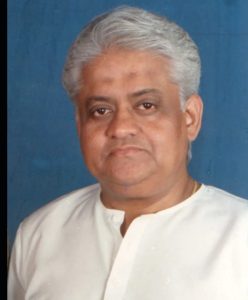
Life story of Pyarelal Ramprasad Sharma is an extraordinary narrative of absolute dedication, technical brilliance, and creative resilience. Emerging from childhood economic hardships that forced him into recording studios at the tender age of ten, he transformed personal struggles into an artistic legacy that defined the soundscape of a nation. Through his deep mastery of both Indian emotional sensibilities and complex Western symphonic architecture, he elevated film instrumentation to an art form.
The melodies he structured along with his late partner Laxmikant continue to play in millions of homes daily, completely untouched by the passage of time. Conferred with the prestigious Padma Bhushan, Pyarelal remains a living monument to an era when music was crafted by human hands, massive live acoustic sections, and pure, unfiltered passion. His journey stands as the ultimate blueprint for aspiring musicians, proving that true technical mastery coupled with an open heart can create melodies that live forever.
About The Author
