
Bidhan Chandra Roy: The Doctor Who Built a State and Healed a Nation
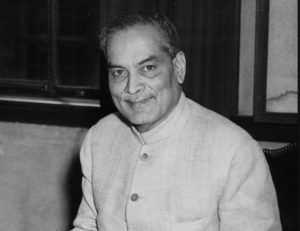
A Man Unlike Any Other
Imagine waking up on your 80th birthday, seeing your morning patients as usual, reviewing the political affairs of an entire state — and then dying quietly before the day is out. That was Bidhan Chandra Roy. Even at the very end, he was working.
Bidhan Chandra Roy was born on 1 July 1882 and died on 1 July 1962 — his 80th birthday. In between those two dates sat one of the most extraordinary lives in modern Indian history. He was a physician, a freedom fighter, and a statesman who served as Chief Minister of West Bengal for over a decade. He built cities, founded hospitals, fought the British, treated Mahatma Gandhi personally, and still found time to tend to his garden.
Most people who achieve one of those things in a lifetime are considered remarkable. Bidhan Chandra Roy did all of them — and did them well.
Bidhan Chandra Roy Early Life
Growing Up With Ambition and Loss
Bidhan Chandra Roy was born into a Bengali Kayastha family in Bankipore in Patna, where his father, Prakash Chandra Roy, was serving as an excise inspector. His mother, Aghorkamini Devi, was religious and a devoted social worker. Roy was the youngest of five siblings.
It was not an easy childhood. His mother passed away when he was only 14 years old. His father had to stay outdoors most of the time because of his work, and the five siblings divided amongst themselves the responsibilities of domestic work. Loss and responsibility came early for Bidhan — and they built in him a quiet resilience that would define the rest of his life.
In 1897, he passed his matriculation examination from Patna Collegiate School. He later completed his I.A. from Presidency College, Calcutta and B.A. Honours in Mathematics from Patna College. The boy was clearly brilliant — and he knew what he wanted to do with that brilliance.
He got through the admission of both Calcutta Medical College and Bengal Engineering College. Nevertheless, he chose medicine over engineering and moved to Calcutta in 1901 to study at Calcutta Medical College.
That choice — medicine over engineering — would eventually shape the health infrastructure of an entire state.
Bidhan Chandra Roy Medical Education
A London Story of Determination
After completing his initial studies, Roy set his sights on England. But getting there wasn’t simple, and staying there was even harder.
In February 1909, Bidhan Chandra Roy left for England to continue further medical studies at St Bartholomew’s Hospital in London. By the year 1911, Bidhan Chandra Roy had completed both his M.R.C.P. and F.R.C.S. degrees in a span of only two years and three months.
Two of the most demanding postgraduate medical qualifications in the British system — completed simultaneously in just over two years. That is not normal. That is exceptional.
He was not just building a career. He was building a system.
Also Read: Prince Yadav Biography: The Pacer Who Survived a Ban to Reach the IPL
Bidhan Chandra Roy Building Medical Institutions
His Lasting Gift to Calcutta
Dr. Roy’s contribution to healthcare in West Bengal is staggering in its scale. Several medical institutions in Calcutta, like the Jadavpur T.B. Hospital, the R.G. Kar Medical College, the Chittaranjan Seva Sadan, the Chittaranjan Cancer Hospital, the Victoria Institution and the Kamala Nehru Hospital were set up by Bidhan Chandra Roy.
He played an instrumental role in the creation of two prestigious medical institutions — the Medical Council of India, of which he was the first president between 1939 and 1945, and Kolkata’s first-ever postgraduate medical college.
Think about that for a moment. Kolkata’s first postgraduate medical college. The Medical Council of India’s very first president. These aren’t footnotes in his biography — they are pillars of Indian medical history.
Bidhan Chandra Roy Entering Politics
Inspired by a Friend, Driven by Principle
Dr. Roy didn’t drift into politics. He walked in deliberately, inspired by one of Bengal’s most beloved leaders.
Inspired by Chitta Ranjan Das, he entered Bengal politics in the early 1920s. It was a natural extension of his values — a man who had spent years healing individuals now wanted to heal society.
In 1925, Roy ran for elections from the Barrackpore constituency as an independent candidate for the Bengal Legislative Council and defeated the “Grand Old Man of Bengal”, Surendranath Banerjee. Defeating Surendranath Banerjee — one of the most respected political figures of that era — in his very first election was an enormous statement. Roy wasn’t experimenting with politics. He meant it.
Roy was elected to the All India Congress Committee in 1928. Roy conducted Civil Disobedience in Bengal in 1929 and prompted Pandit Motilal Nehru to nominate him as a member of the Congress Working Committee in 1930. The CWC was declared an unlawful assembly and Roy along with other members of the committee were arrested on 26 August 1930 and detained at Alipore Central Jail.
Even in jail, Roy couldn’t stop being a doctor. Being requested by the jail authority, he, while a prisoner, took over the charge of the Alipore Jail Hospital and helped the prisoners. The man was simply incapable of not being useful.
Bidhan Chandra Roy Gandhi’s Doctor, Gandhi’s Friend
The relationship between Bidhan Chandra Roy and Mahatma Gandhi is one of the most touching personal stories in India’s independence era. They were more than political allies — Roy was Gandhi’s physician and, by all accounts, a genuine friend.
When Gandhi had taken ill during the Quit India Movement of 1942, it was Dr. B.C. Roy who treated him. And when Roy was reluctant to take the Chief Ministership of West Bengal, it was Gandhi who persuaded him to accept.
The Congress Party proposed Roy’s name for Premier of West Bengal. Although Roy sought to continue with his profession, he accepted the position on Gandhi’s advice, taking office on 23 January 1948.
That one sentence says everything about who Bidhan Chandra Roy was. He didn’t chase power. He had to be convinced to take it. In a political world full of people scrambling for positions, Roy had to be pulled toward the Chief Minister’s chair by his closest friend.
Bidhan Chandra Roy Chief Minister of West Bengal
Building a State From Rubble
The West Bengal that Roy inherited in 1948 was not the vibrant state it would become. It was a state in crisis — raw, broken, and overwhelmed.
Bengal at the time had been torn by communal violence, shortage of food, unemployment and a large flow of refugees in the wake of the creation of East Pakistan.
Roy’s response wasn’t to make speeches. It was to build.
Within three years, his governance restored Bengal’s law, order, and lost glory. He laid the foundation of five renowned cities, namely Durgapur, Kalyani, Bidhannagar, Ashokenagar, and Habra.
Each of those cities deserves its own biography. Durgapur became an industrial backbone. Kalyani became a planned township. Bidhannagar — today known as Salt Lake — became one of Kolkata’s most significant modern extensions. These weren’t administrative decisions made in comfortable boardrooms. They were acts of deliberate, visionary urban development carried out while a state was still healing from the wounds of Partition.
Under his leadership, the Congress party won the legislative assembly elections in West Bengal in 1952 and 1957. The people of West Bengal voted for him again and again — not because of dynastic loyalty or political machinery, but because they could see with their own eyes what he was building.
Three Real-World Case Studies
Case Study 1 — The Founding of Durgapur
When Roy identified the Durgapur region for industrial development, many questioned the investment in an underdeveloped area. But Roy understood that post-Partition Bengal needed economic anchors, not just symbolic gestures. Durgapur Steel Plant, established under his watch, became one of India’s most important steel-producing hubs — creating employment, attracting investment, and proving that Roy’s instinct for long-term development was sound.
Case Study 2 — Treating Gandhi While Under Political Pressure
In 1942, India was in the middle of the Quit India Movement — one of the most volatile political periods in the country’s history. Roy was simultaneously a senior Congress figure and Gandhi’s personal physician. Treating Gandhi while the entire independence movement was under British crackdown wasn’t just a medical act. It was a political one, carrying personal risk. Roy did it without hesitation.
Case Study 3 — Settling Partition Refugees
When millions of Hindu refugees poured into West Bengal from East Pakistan after 1947, the logistical and humanitarian scale of the crisis was immense. Roy’s administration not only managed the refugee flow but channeled it constructively — creating townships like Kalyani partly to absorb and rehabilitate displaced communities. It remains one of the most underreported administrative achievements in post-independence Indian history.
Comparison Table
Bidhan Chandra Roy at a Glance
| Area | Achievement |
|---|---|
| Medical Qualification | M.R.C.P. and F.R.C.S. from London, completed in 2 years 3 months |
| Medical Council of India | First President (1939–1945) |
| Political Debut | 1925, defeated Surendranath Banerjee |
| Chief Minister Tenure | 1948–1962 (14 years) |
| Cities Founded | Durgapur, Kalyani, Bidhannagar, Ashokenagar, Habra |
| Highest Civilian Honor | Bharat Ratna, 4 February 1961 |
| Legacy Award | B.C. Roy National Award (instituted 1962, awarded annually since 1976) |
| National Remembrance | National Doctors’ Day celebrated every year on 1 July |
Bidhan Chandra Roy Personal Life
The Man Behind the Legend
Bidhan Chandra Roy was never married. He gave his entire life — completely and without reservation — to medicine and public service.
He was known for his love of gardening and was an avid gardener in his spare time, often tending to his own garden at his residence. Roy was also a skilled painter and enjoyed expressing his creativity through art, often creating beautiful watercolor landscapes. Despite his busy schedule, he was a devoted animal lover and often took in stray animals, caring for them.
There is something deeply humanizing about that image — one of India’s greatest physicians and statesmen, quietly painting watercolors and feeding stray animals in his spare moments.
He had also constituted a trust for his properties at Patna to carry out social service. Even in how he arranged his estate, Roy was thinking of others.
Bidhan Chandra Roy Death
A Life Completed on Its Own Terms
He died on his 80th birthday — 1 July 1962 — shortly after he had treated patients in the early hours of the morning and gone through the political matters of West Bengal.
It is almost impossible to imagine a more fitting end. He spent his last morning doing what he had always done — healing people and governing a state. Then he was gone. Born on the first of July, died on the first of July, eighty years apart almost to the hour.
His house was later converted into a nursing home named after his mother, Aghorkamini Devi. The mother he had lost at fourteen, whose name he carried through decades of public life, was finally honored in the most permanent way he could manage.
Bidhan Chandra Roy Legacy
What Remains
The B.C. Roy National Award was instituted in 1962 in his memory and has been awarded annually since 1976. The award recognises excellent contributions in the areas of medicine, politics, science, philosophy, literature and arts.
In India, the National Doctors’ Day is celebrated in his memory every year on 1 July
The Indian Government honoured Roy with the Bharat Ratna on 4 February 1961. He received it a year before he died — just long enough to know that his country understood what he had given it.
Frequently Asked Questions (FAQ)
Who was Bidhan Chandra Roy?
He was an Indian physician, freedom fighter, and politician who served as the Chief Minister of West Bengal from 1948 until his death in 1962. He is widely regarded as the architect of modern West Bengal.
Why is National Doctors’ Day celebrated on 1 July?
National Doctors’ Day in India is celebrated on 1 July every year to honor the birth and death anniversary of Dr. Bidhan Chandra Roy.
What is the Bharat Ratna he received?
The Bharat Ratna is India’s highest civilian honor. Dr. Roy received it on 4 February 1961, in recognition of his extraordinary contributions to medicine and public service.
Did Bidhan Chandra Roy ever marry?
No, Dr. Roy never married. He devoted his entire life to medicine and public service.
What cities did Bidhan Chandra Roy found?
He founded five major cities in West Bengal: Durgapur, Kalyani, Bidhannagar (Salt Lake), Ashokenagar, and Habra.
How did Bidhan Chandra Roy die?
He died on 1 July 1962 — his 80th birthday — after treating patients in the morning and reviewing state affairs, passing away quietly before the day ended.
Also Read: Manmohan Singh: The Economist Who Reshaped India
Conclusion
A Life That Cannot Be Summarized
Bidhan Chandra Roy is one of those rare people that history struggles to contain in a single category. Was he a doctor? Yes — one of the best of his generation. A politician? Yes — one who served 14 uninterrupted years as Chief Minister. A freedom fighter? Absolutely. A city builder? He founded five of them.
But above all of those titles, he was a man who simply refused to stop being useful. Right to the last morning of his 80th year.
India has produced many great leaders. Very few of them also treated their patients on the morning of their final day on earth.
Was this biography helpful? Share it with someone who loves Indian history, or drop a comment below. Subscribe for more in-depth, human-written biographies of India’s most remarkable figures.
About The Author
