
Bal Gangadhar Tilak: Architect of India’s Swaraj Movement
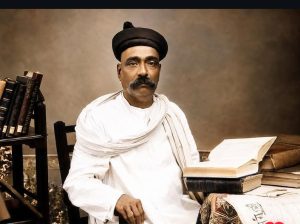
Bal Gangadhar Tilak: Architect of India’s Swaraj Movement
Bal Gangadhar Tilak: Architect of India’s Swaraj Movement
Lokmanya Bal Gangadhar Tilak, popularly known and called Keshav Gangadhar Tilak, stands as one of the most decisive and visionary leaders in the history of modern India. A multi-faceted personality, Tilak was a mathematician, scholar, lawyer, journalist, social reformer, and radical nationalist who transformed the Indian national movement from an elite debate into a mass political uprising.
Long before the arrival of Mahatma Gandhi on the Indian political stage, Tilak galvanized millions of citizens with his bold declaration: “Swaraj is my birthright and I shall have it”. Dubbed the “Father of Indian Unrest” by British author Sir Valentine Chirol, Tilak earned the honorific title Lokmanya—meaning “accepted and revered by the people”—for his steadfast commitment to liberation from colonial rule, cultural revival, and national self-reliance.
Bal Gangadhar Tilak Early Life, Ancestry, and Educational Foundation
Keshav Gangadhar Tilak was born on July 23, 1856, into a middle-class Marathi Hindu Chitpavan Brahmin family in Ratnagiri, a coastal district in the Bombay Presidency (present-day Maharashtra, India). His father, Gangadhar Ramachandra Tilak, was a respected schoolteacher and Sanskrit scholar, while his mother, Satyabhamabai, instilled in him strong moral and cultural values.
In 1866, when Tilak was ten years old, the family relocated to Poona (now Pune), an intellectual and political hub in Western India. The death of his mother in his early childhood, followed by his father’s passing when Tilak was just sixteen, forced him to develop self-reliance and intellectual discipline at a young age. In 1871, at sixteen, he married Tapibai, who was subsequently renamed Satyabhamabai according to local custom.
Tilak was among the first generation of Indian youth to receive a modern university education under British rule. He attended Deccan College in Pune, where he excelled in mathematics, Sanskrit, and history. He graduated with a Bachelor of Arts in Mathematics with first-class honors in 1877. Driven by a desire to understand administrative and constitutional mechanisms, he continued his studies at the Government Law College in Bombay, securing his Bachelor of Laws (L.L.B.) degree in 1879.
Rather than pursuing a lucrative law practice or accepting a government post under the British administration, Tilak chose to dedicate his life to public service, public education, and nation-building.
Also Read: Biography of Justice Aggrey Otsyula Muchelule: Life, Judicial Career, and Legacy
Bal Gangadhar Tilak Educational Reforms and Nationalist Awakening
Tilak strongly believed that true national liberation required an educational system rooted in Indian culture, self-respect, and democratic principles. He viewed the colonial education system as a mechanism designed to produce obedient clerks rather than independent thinkers.
To bridge this divide, Tilak partnered with key progressive thinkers of his era, most notably Gopal Ganesh Agarkar and Vishnushastri Chiplunkar.
Together, they launched pioneering educational initiatives in Pune:
- New English School (1880): Established to provide affordable secondary education emphasizing science, Indian history, and national culture.
- Deccan Education Society (1884): Formed to create an autonomous network of educational institutions managed by Indians for Indians.
- Fergusson College (1885): Founded under the auspices of the Deccan Education Society, this institution became a premier hub for higher education, producing numerous political activists, writers, and public servants.
Tilak served as a lecturer in mathematics and history at these institutions, viewing teaching as a moral responsibility to awaken civic consciousness among Indian youth.
Bal Gangadhar Tilak Journalism as a Political Weapon
Recognizing that formal schooling reached only a limited audience, Tilak turned to print journalism to reach the wider public. In January 1881, he co-founded two seminal newspapers:
- Kesari (The Lion): A Marathi-language weekly edited primarily by Tilak, designed to educate workers, farmers, and the middle class in straightforward, fiery language.
- The Mahratta: An English-language weekly aimed at policy-makers, colonial officials, and the educated elite across India.
Through Kesari, Tilak criticized colonial economic exploitation, exposed bureaucratic incompetence during famines and epidemics, and argued that political freedom (Swaraj) was an indispensable prerequisite for all social progress. His editorials transformed journalism into a direct instrument of mass political education.
Bal Gangadhar Tilak Cultural Nationalism and Mass Mobilization
Tilak recognized that political arguments alone were insufficient to unite a religiously and linguistically diverse population. To build national solidarity, he transformed traditional private cultural gatherings into large-scale public celebrations:
Public Ganesh Utsav (1893)
Tilak turned the annual domestic worship of Lord Ganesha into a public ten-day festival featuring lectures, community singing, and political theater. This provided a legitimate public platform for people across various castes and backgrounds to assemble, bypassing colonial bans on political gatherings.
Shivaji Jayanti (1895)
To instill courage and historic pride, Tilak instituted the public celebration of Chhatrapati Shivaji Maharaj’s birth anniversary. He highlighted Shivaji’s resistance against foreign tyranny as an inspiring historical parallel for the modern anti-colonial struggle.
Through these festivals, Tilak pioneered a strategy of cultural revivalism, bringing rural masses and the working class directly into the mainstream nationalist movement.
Bal Gangadhar Tilak Political Career, Ideological Split, and Radical Nationalism
In 1890, Tilak formally aligned himself with the Indian National Congress (INC).
However, he quickly grew dissatisfied with the prevailing “Moderate” leadership, led by figures like Gopal Krishna Gokhale, who favored petitions, legal appeals, and gradual constitutional reform.
Tilak advocated a radical, direct approach centered on four fundamental pillars:
- Swaraj (Self-Rule): Complete political autonomy rather than administrative concessions.
- Swadeshi (Local Production): Fostering home-grown goods and manufacturing to secure financial self-reliance.
- Boycott: Refusing to purchase British goods or serve in colonial administrative roles to dismantle economic exploitation.
- National Education: Establishing self-reliant educational institutions free from colonial oversight.
Bal Gangadhar Tilak Lal-Bal-Pal Triumvirate
Alongside Lala Lajpat Rai of Punjab and Bipin Chandra Pal of Bengal, Tilak formed the famous Lal-Bal-Pal nationalist triumvirate. Together, they led the extremist faction within the Congress, demanding assertive resistance against imperial policies.
Partition of Bengal and the Surat Split (1907)
When Lord Curzon partitioned Bengal in 1905 to weaken the anti-colonial movement, Tilak led a nationwide Swadeshi and Boycott campaign in response. Tensions between Moderates and Extremists culminated at the 1907 Surat Session of the Indian National Congress, where the party split into two distinct factions. Tilak emerged as the undisputed leader of the nationalist group.
Bal Gangadhar Tilak Trials, Imprisonment, and the Mandalay Exile
Tilak’s fiery editorials brought him into continuous conflict with British authorities, leading to multiple high-profile trials for sedition:
Lokmanya Bal Gangadhar 1897 Trial
Following the assassination of British Plague Commissioner W.C. Rand in Pune by the Chapekar brothers, colonial authorities blamed Tilak’s articles in Kesari for inciting violence. Tried for sedition under Section 124A of the Indian Penal Code, he was sentenced to 18 months of hard labor. His courageous courtroom defense transformed him into a national hero, earning him the title Lokmanya.
1908 Trial and Mandalay Deportation
In 1908, after two young revolutionaries—Khudiram Bose and Prafulla Chaki—attempted to assassinate a British magistrate, Tilak wrote editorials in Kesari defending the underlying motivations of the revolutionaries while cautioning against individual violence. The colonial government charged him with sedition once again.
Representing himself during a famous six-day trial in Bombay, Tilak delivered a legendary statement to the court:
“Notwithstanding the jury’s verdict, I remain steadfast in my innocence. Higher forces ultimately direct human destinies, and divine will may decree that the movement I champion advances further through my suffering than through my freedom.”
suffering than by my remaining free.”*Sentenced to six years of deportation, Tilak was imprisoned at Mandalay Jail in Burma (now Myanmar) from 1908 to 1914.
Literary Legacy and Philosophical Scholarship
During his harsh six-year confinement in Mandalay, Tilak turned to intense scholarship, producing works on Indian philosophy, astronomy, and Vedic research:
- Gita Rahasya (1915): Written in prison, this commentary on the Bhagavad Gita interprets the sacred text as a manual for active, selfless action (Karma Yoga) rather than passive renunciation. It urged Indians to engage in righteous struggle against political oppression.
- The Arctic Home in the Vedas (1903): An astronomical and historical study proposing that the ancestral origins of the Vedic Aryans lay in the Arctic regions.
- The Orion; or, Researches into the Antiquity of the Vedas (1893): A work using astronomical calculations to date the Vedic texts to early antiquity.
Bal Gangadhar Tilak Home Rule Movement and the Lucknow Pact (1916)
Released from Mandalay in 1914 at the onset of World War I, Tilak returned to an altered political landscape. Rebuilding his political organization, he launched two major initiatives:
All India Home Rule League (1916)
In April 1916, Tilak established the Indian Home Rule League in Belgaum to demand self-government within the British Empire through constitutional agitation. Working alongside British socialist and activist Annie Besant—who founded a parallel Home Rule League in Madras—Tilak toured India, mobilizing hundreds of thousands of followers.
Lucknow Pact (1916)
Demonstrating political pragmatism, Tilak rejoined the Indian National Congress in 1916 and worked to bridge historic political divides:
- Reunification: Mended the divide between the Congress Party’s Moderate and Extremist wings.
- Hindu-Muslim Unity: Co-authored the landmark Lucknow Pact alongside Muhammad Ali Jinnah. This agreement established a joint platform between the Congress and the All-India Muslim League to press the British Crown for self-governance.
Also Read: Comprehensive Biography of Anurag Dhankar: Life, Career, and Legacy of a Distinguished IPS Officer
Final Years and Death
In 1918, Tilak traveled to London to pursue a libel lawsuit against Sir Valentine Chirol over statements in Chirol’s book Indian Unrest. Despite losing the court case, Tilak utilized his time in England to build alliances with British political factions and advocate directly to the imperial Parliament for Indian self-determination.
Upon returning to India in late 1919, Tilak’s health began to decline rapidly. Despite failing health, he continued public work, advising Indian nationalists to practice “responsive cooperation” regarding the Montagu-Chelmsford administrative reforms.
On August 1, 1920, Lokmanya Bal Gangadhar Tilak passed away in Bombay at the age of 64. His funeral was attended by over 200,000 mourners, including Mahatma Gandhi, who hailed him as the “Maker of Modern India”. Coincidentally, August 1, 1920, also marked the formal launch of Mahatma Gandhi’s Non-Cooperation Movement, seamlessly transferring the leadership of the independence movement into the Gandhian era.Bal Gangadhar Tilak Key Life Events and Achievements
Date Significant Event / Era Historical Consequence 1856 Born in Ratnagiri, Maharashtra Birth of an influential Indian nationalist leader. 1877 Graduated in Mathematics from Deccan College Completed higher education in mathematics and law. 1880 Co-founded the New English School, Pune Initiated grassroots educational reforms in Western India. 1881 Launched Kesari and Mahratta newspapers Created influential outlets for political education and journalism. 1884 Established the Deccan Education Society Institutionalized modern national education. 1893 Publicly popularized Ganesh Utsav Converted a cultural festival into a mass political movement. 1897 Tried for sedition; sentenced to 18 months Earned national reverence and the honorific title Lokmanya. 1905 Led Swadeshi and Boycott Movements Resisted the Partition of Bengal through economic non-cooperation. 1908 Sentenced to 6 years imprisonment at Mandalay Authored Gita Rahasya during exile in Burma. 1916 Established the Indian Home Rule League and endorsed the Lucknow Pact Reintegrated fractured political movements and forged a unified Hindu-Muslim nationalist front. 1920 Passed away in Bombay (aged 64) Marked the transition to the Gandhian era of the freedom struggle.
Frequently Asked Questions about Bal Gangadhar Tilak
What is the historical significance of Lokmanya Tilak’s famous slogan?
Tilak proclaimed, “Swaraj is my birthright and I shall have it”. This slogan shifted the nationalist debate from soliciting minor administrative concessions to asserting complete self-determination as an inherent right.
Why was Bal Gangadhar Tilak referred to as the “Father of Indian Unrest”?
British author Sir Valentine Chirol coined the phrase in his book Indian Unrest. Colonial authorities viewed Tilak as a major challenge to imperial rule because he mobilized the working class, rural peasantry, and youth against colonial governance.
What were the main newspapers started by Lokmanya Tilak?
In 1881, Tilak co-founded Kesari, a Marathi-language weekly that reached the broader public, and The Mahratta, an English-language weekly designed for national political discourse.
What was Lokmanya Tilak’s contribution to education in India?
Tilak believed that national self-reliance began with accessible education. He co-founded the New English School (1880), the Deccan Education Society (1884), and Fergusson College (1885) in Pune to offer an alternative to colonial schooling.
What major book did Tilak write during his imprisonment in Mandalay?
While Lokmanya Bal Gangadhar serving a six-year sentence in Mandalay Jail (Burma), Tilak wrote Gita Rahasya (The Secret of the Bhagavad Gita). The book presents the Bhagavad Gita as a guide to selfless duty (Karma Yoga) and active resistance against injustice.
Conclusion
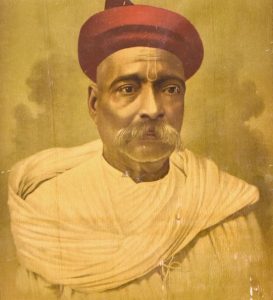
In India today Lokmanya Bal Gangadhar name cannot be forgotten because he transformed India’s independence movement by bridging intellectual discourse and mass political action. Through educational leadership, crusading journalism, cultural revivalism, and uncompromising political agitation, he established self-rule (Swaraj) as the ultimate goal of the freedom struggle. His legacy as a scholar, patriot, and champion of self-determination continues to serve as an enduring foundation of modern Indian history.
About The Author
