
Complete Biography of Pawan Kumar Chandana: The Maverick of Indian Spacetech

Complete Biography of Pawan Kumar Chandana: The Maverick of Indian Spacetech
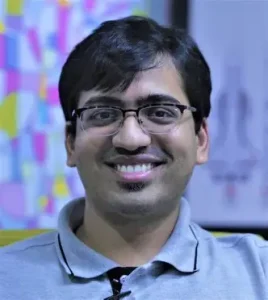
Complete Biography of Pawan Kumar Chandana. The sky rocket co- founder and the Maverick of Indian Spacetech. The story of global space exploration has long been a narrative dominated by massive state-funded agencies. In India, the Indian Space Research Organisation (ISRO) historically carried the entire weight of the nation’s celestial ambitions on its shoulders. However, a seismic shift occurred in the global landscape, making room for private enterprise to reshape how humanity accesses the stars. At the absolute forefront of this commercial space revolution in India stands Pawan Kumar Chandana, an aerospace engineer, former ISRO scientist, and the co-founder and CEO of Skyroot Aerospace.
Often referred to in media circles as the Elon Musk of India, Chandana did what most traditional Indian professionals would consider unthinkable. He walked away from a highly secure, prestigious government career at ISRO to venture into the unchartered, capital-intensive territory of private rocket manufacturing. His gamble paid off spectacularly. Under his visionary leadership, Skyroot Aerospace transitioned from a bold idea into India’s premier private space entity, completing historic launches that placed the nation into an elite club of global commercial space powers.
Pawan Kumar Early Life,
Pawan Kumar Chandana was born in 1991 in Hyderabad, located in the southern Indian state of Telangana. Raised in a traditional middle-class household, his early environment was one where academic discipline was highly valued but not necessarily marked by immediate, prodigy-level brilliance. Unlike many who go on to build advanced aerospace systems, Chandana was not a flawless student who topped every examination without effort.
His academic path took a crucial turn during his school days after a math exam left him with just 51 out of 100 marks. In most cases, a score that low would push a student away from the hard sciences. Fortunately, his father looked past the report card, recognizing an innate passion for machinery and design that no standardized test could measure. Instead of expressing disappointment, his father proactively enrolled him in dedicated preparatory coaching for the Indian Institutes of Technology (IIT) Joint Entrance Examination.
This intensive academic immersion triggered a fundamental shift in Chandana’s relationship with numbers and physical laws. Abstract mathematical formulas suddenly transformed into logical tools that explained the physical world around him. Physics became a profound passion rather than an academic chore. His newfound dedication bore fruit when, in 2007, he cleared the highly competitive IIT-JEE on his very first attempt. He earned entry to IIT Kharagpur, completing a five-year integrated dual-degree track. By 2012, he graduated with a Bachelor of Technology in Mechanical Engineering and a Master of Technology in Thermal Engineering. His time at IIT Kharagpur provided him with the core analytical skills, structural insights, and foundational engineering principles that would later form the backbone of his aerospace career.
Pawan Kumar Learning from the Masters
Rather than staying local, the majority of his IIT classmates migrated internationally to step into high-paying roles within finance or software engineering. Chandana, however, took a completely different path, keeping his eyes fixed resolutely upward.. His fascination with rocket propulsion and orbital mechanics led him straight to the doorstep of the nation’s premier space agency. In 2012, fresh out of college, he was directly recruited by ISRO. He was posted to the iconic Vikram Sarabhai Space Centre (VSSC) in Thiruvananthapuram, Kerala—the epicenter of India’s launch vehicle development programs.
Chandana spent nearly six years at VSSC, an era he often describes as his real-world crucible. At ISRO, he was not merely a passive observer; he was thrust into some of the agency’s most high-profile and complex engineering projects. His primary contributions were centered on the development of structural and propulsion components for heavy launch vehicles.
- GSLV Mk-III Development: He actively worked on the Geosynchronous Satellite Launch Vehicle Mark III (now known as LVM3), India’s heaviest and most powerful operational rocket, which later launched historic missions like Chandrayaan-2 and Chandrayaan-3.
- Solid Booster Engineering: Chandana functioned as a system engineer for the massive S200 solid rocket boosters, which provide the crucial initial thrust required to lift heavy payloads off the launchpad.
- SSLV Leadership: Recognizing his organizational and technical competence, ISRO appointed him as the Deputy Project Manager for the Small Satellite Launch Vehicle (SSLV) project. This specific role exposed him directly to the rapid global surge in demand for small satellite launches, planting the conceptual seeds for his future business model.
During his tenure, his innovative problem-solving methods earned him two distinct internal innovation awards within ISRO. By 2018, Chandana had attained a highly respected, secure government post that millions of Indian engineers strive for, putting him on a definite track toward long-term professional growth senior scientific leadership.
Also Read: IPS Anurag Kumar Biography: Age, Career, Achievements, and Journey of the Delhi Police Commissioner
Why Pawan Kumar Left ISRO
Despite his deep affection for ISRO and the vital work he performed there, Chandana began to notice a widening gap in the global space economics paradigm. The global space sector was undergoing a rapid transformation, driven by the proliferation of small satellites used for Earth observation, communications, and localized internet constellations.
Traditional government agencies, burdened by massive institutional mandates and deep bureaucratic processes, were structurally unsuited to cater to the fast-moving, high-frequency, and low-cost demands of commercial satellite operators.
Chandana realized that if India did not develop a private commercial launch ecosystem, it would lose out on a massive multi-billion-dollar global market. Furthermore, India’s 2018 legal environment barred private involvement entirely, as no regulatory framework existed for a private company to build or own space hardware. or launch an independent rocket from Indian soil.
To start a private rocket company under those conditions was widely deemed an act of professional suicide. Yet, driven by the firm conviction that rockets are the most fascinating machinery ever built by human hands, Chandana resigned from ISRO in 2018. Returning to his native city of Hyderabad, he brought with him a singular, well-defined goal—to open up space exploration to the wider world.
Pawan Kumar Navigating Early Turbulence
In June 2018, Pawan Kumar Chandana teamed up with his former ISRO colleague and fellow IIT alumnus, Naga Bharath Daka, to officially incorporate Skyroot Aerospace. Headquartered in Hyderabad, the startup set out to design a modular family of launch vehicles explicitly tailored for the global small-satellite market.
The initial months of operation brought significant financial and operational hurdles. While Chandana was a brilliant rocket engineer, he had absolutely no background in corporate management, capital acquisition, or venture economics. He had to spend nights reading business material online simply to understand basic corporate concepts like equity dilution, cap tables, and term sheets. Pitching a rocket company to Indian venture capitalists in 2018 was an uphill battle; most domestic investors were accustomed to funding consumer software applications or fintech platforms and viewed hardware-heavy aerospace engineering as an impossibly risky bet.Skyroot Funding & Valuation Milestones (2018 – 2026)
Year, Milestone / Event Capital Raised
In 2018 Seed Round (Led by Mukesh Bansal) $1.5 Million
In 2023 Pre-Series C Round (Temasek) $27.5 Million
In 2026 Series D Extension Round $60.0 Million
Total Cumulative Capital Raised (By mid-2026): ~$160 Million
Current Company Market Valuation (Post-May 2026): $1.1 Billion (Unicorn Status)
The true turning point arrived when Chandana managed to secure a meeting with prominent tech entrepreneur Mukesh Bansal. Impressed by Chandana’s absolute clarity of thought and deep technical competence, Bansal provided a vital seed investment of $1.5 million, giving Skyroot its initial financial lifeline. This initial capital allowed Chandana to set up a small laboratory and hire a core team of senior retired ISRO scientists and brilliant young engineering minds.
Pawan Kumar Architectural Breakthroughs and Technological Mastery
Chandana understood that to compete with global spacetech giants, Skyroot could not simply copy old aerospace manufacturing models. It needed a complete structural and economic makeover. Under his guidance as both CEO and Chief Technology Officer (CTO), the company pioneered several cutting-edge technological frameworks within the Indian manufacturing sector:
- Advanced 3D Printing: Skyroot became the first Indian entity to fully design and test 3D-printed liquid-propellant and cryogenic rocket engines. By adopting cutting-edge 3D printing, Chandana managed to build complex engine components in just a few days rather than several months, aggressively driving down standard production costs.
- Carbon Composite Airframes: To maximize payload capability, Chandana’s design philosophy leaned heavily into advanced carbon composite structures. The entire airframe of their flagship rocket series is fabricated from high-strength carbon fibers, making the vehicle lighter than aluminum while maintaining structural integrity during atmospheric transit.
- The Vikram Series Architecture: Named in profound honor of Dr. Vikram Sarabhai, the father of the Indian space program, Chandana designed the Vikram rocket series as a highly modular platform. The architecture allows satellite clients to customize their launch requirements with minimal turnaround time.
In July 2020, Skyroot achieved its first major hardware milestone by successfully static testing the Raman-1 engine, an earth-storable liquid rocket engine named after Nobel laureate C.V. Raman. This was quickly followed by the successful development of the Dhawan series of cryogenic engines, which utilize liquid natural gas and liquid oxygen as clean, highly efficient propellants.
Pawan Kumar Mission Prarambh
The year 2020 also brought a seismic policy shift that validated Chandana’s entire gamble. Recognizing the global momentum of the private space sector, the Government of India introduced comprehensive space reforms, creating the Indian National Space Promotion and Authorisation Centre (IN-SPACe). This milestone allowed private space companies to formally utilize ISRO’s launchpads, tracking stations, and testing facilities. Skyroot became the very first startup to sign a comprehensive framework memorandum of understanding with the government under this new regime.
This collaboration set the stage for November 18, 2022—a date permanently etched into the annals of global space history. Under a mission appropriately named Prarambh (meaning “The Beginning”), Skyroot Aerospace successfully launched the Vikram-S suborbital rocket from the Satish Dhawan Space Centre in Sriharikota.
The single-stage solid-fueled rocket soared to an altitude of 89.5 kilometers, successfully validating nearly 80 percent of the critical core technologies required for Skyroot’s upcoming orbital vehicles. With this single flight, Pawan Kumar Chandana became the first entrepreneur in Indian history to successfully design, build, and launch an independent rocket into space, effectively proving the viability of India’s private aerospace ecosystem on the global stage.
Pawan Kumar Reaching Orbit and Entering the Unicorn Club
Following the massive triumph of Mission Prarambh, Chandana redirected his team toward the ultimate holy grail of aerospace engineering: achieving sustained low Earth orbit. This required the completion of their heavy multi-stage orbital vehicle, the Vikram-1.
To fund this massive expansion, Chandana spearheaded a series of highly successful international funding rounds. Skyroot secured substantial financial backing from major global institutions, including Singapore’s sovereign wealth fund Temasek Holdings, GIC, Meraki Labs, and the founders of the Greenko Group. A $60 million investment in May 2026 propelled Skyroot Aerospace past a $1.1 billion valuation, making it the very first Indian space-tech startup to achieve unicorn status.
The company moved its core operations into the sprawling, 200,000-square-foot Infinity Campus in Hyderabad—the largest private rocket design and integration factory anywhere in South Asia.
The culmination of Chandana’s decade-long dream manifested on July 18, 2026, during Mission Aagaman. Launching from Sriharikota, the all-carbon composite Vikram-1 rocket performed a flawless multi-stage separation sequence, successfully deploying both domestic and international commercial payloads at an altitude of 453 kilometers.
This historic feat made Skyroot the first private enterprise in the world to successfully achieve orbital insertion on its very first try, placing India alongside the United States and China as one of the only three countries on Earth possessing active private orbital launch capabilities. Moments after the successful launch, Prime Minister Narendra Modi phoned Chandana right on the field. He offered his personal congratulations, praising the engineer for laying down an enduring new foundation for India’s aerospace sector and the global space landscape.
Pawan Kumar Leadership Style, Recognition, and Personal Philosophy
Pawan Kumar Chandana’s rapid ascent within the global tech arena has earned him massive institutional and public recognition. He was featured prominently on the prestigious Forbes 30 Under 30 Asia list and was named one of the Next 100 Young Achievers by India Today.
Despite the intense public spotlight and his status as a structural leader of India’s new industrial age, Chandana remains an engineering-first executive. He spends an extensive amount of time directly on the factory floors of the Infinity Campus, working side-by-side with junior technicians and structural assembly teams. He champions a corporate culture defined by rapid iterative testing, open communicative hierarchies, and an absolute lack of fear regarding calculated engineering failures.
”Rockets are arguably the most captivating pieces of technology that mankind has ever created.” Our task is not just to build them, but to subject them to a total techno-economic makeover. We are building the transport infrastructure that will open up an entirely new frontier for human access, resource acquisition, and deep space exploration.” — Pawan Kumar Chandana
Also Read: Anna Hazare Biography: Life, Movements, and Legacy of India’s Gandhian Crusader
Frequently Asked Questions
Why Chandana stepped down from ISRO
Pawan Kumar Chandana resigned from his secure and prestigious role as an ISRO scientist in 2018 because he recognized a massive global shift toward small satellites. He realized that traditional, large state agencies were structurally unsuited to handle the high-frequency, low-cost demands of commercial operators. He wanted to build an agile private company capable of democratizing space access through commercial manufacturing.
What was Chandana’s academic background before entering aerospace?
Chandana completed his schooling in Hyderabad before successfully clearing the highly competitive IIT-JEE on his first attempt in 2007. He attended the Indian Institute of Technology, Kharagpur, where he graduated in 2012 with a comprehensive five-year dual degree consisting of a B.Tech in Mechanical Engineering and an M.Tech in Thermal Engineering.
What historic milestone did Skyroot Aerospace achieve under his leadership?
Under Chandana’s direct leadership, Skyroot Aerospace completed two historic milestones. On November 18, 2022, they successfully launched the Vikram-S rocket, making it India’s first privately developed rocket to enter space. Later, on July 18, 2026, their heavy multi-stage rocket, Vikram-1, successfully achieved orbital insertion and deployed multiple commercial payloads into low Earth orbit.
Is Skyroot Aerospace a profitable or well-funded company?
Skyroot Aerospace is highly well-capitalized and became India’s very first spacetech unicorn in mid-2026, reaching an institutional market valuation of over $1.1 billion. The company has raised approximately $160 million in venture capital from prominent global and domestic investors, including Singapore’s sovereign wealth fund Temasek Holdings, GIC, and Arkam Ventures.
What makes the Vikram series of rockets unique compared to traditional rockets?
The Vikram rocket series, designed under Chandana’s oversight, relies heavily on disruptive manufacturing technologies. The vehicles utilize fully 3D-printed liquid and cryogenic engines, which drastically reduces component count and production time. Additionally, the airframe is built almost entirely from advanced carbon composite materials, maximizing payload capacity while keeping costs exceptionally low.
Conclusion
Pawan Kumar Chandana’s journey is a profound testament to what can be accomplished when deep technical expertise is paired with audacious entrepreneurial courage. By overcoming early academic hurdles, learning from the masters at ISRO, and risking everything to build an independent space company from scratch, he successfully rewrote the rules of Indian industry. The successful orbital insertion of the Vikram-1 rocket in July 2026 does not merely represent a commercial victory for Skyroot Aerospace; it marks the dawn of an entirely new era where private citizens and homegrown startups are no longer just passive observers of space exploration, but are actively driving humanity’s journey into the cosmos.
About The Author
