
Manmohan Singh: The Economist Who Reshaped India
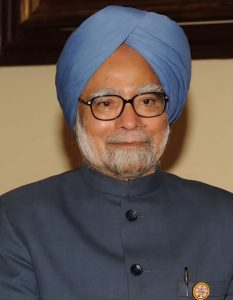
Manmohan Singh: The Economist Who Reshaped India
Manmohan Singh Biography
Introduction
Few leaders in modern Indian history have been as quietly transformative as Dr. Manmohan Singh. A man more comfortable with economic data than political theatrics, he nevertheless became the architect of India’s most consequential economic transformation — and later, its 13th Prime Minister. Barack Obama once described him as “wise, thoughtful, and scrupulously honest.”
This biography traces his journey from a small village in pre-Partition Punjab to the highest office in the world’s largest democracy, and examines why his legacy continues to be debated and honored years after his passing.
Manmohan Singh Early Life and Education
Manmohan Singh was born on 26 September 1932 in Gah, a village in what is today Pakistan. His family migrated east when British India was partitioned in 1947 — a violent upheaval that killed hundreds of thousands, including Singh’s own grandfather.
His early education began modestly: he was first educated at a local gurdwara studying Urdu and Punjabi, before enrolling in government primary school, and later moving to Khalsa School in Peshawar when his family relocated there.
Academic Path
- Bachelor’s degree in economics from Panjab University (1952).
- Master’s degree in economics from Panjab University (1954).
- A further bachelor’s degree in economics from the University of Cambridge, England (1957).
- Later studied at Nuffield College, Oxford.
This rigorous economics training — spanning Indian and British institutions — gave Singh a rare global perspective that would later define his policy decisions.
Also Read: Victor Osimhen Biography: From the Lagos Dumpsite to African Football Royalty
Manmohan Singh Personal Life
Manmohan Singh married Gursharan Kaur in 1958. His mother died when he was very young, and he was raised primarily by his paternal grandmother, Jamna Devi, with whom he shared a close bond.
Finance Minister (1991–1996)
This is arguably the most consequential chapter of Singh’s career. When Singh was named finance minister in 1991 under Prime Minister P.V. Narasimha Rao, India stood on the verge of economic collapse — facing high inflation, an unsustainable fiscal deficit, and a severe balance of payments crisis.
Key 1991 Reforms
Singh introduced sweeping reforms in the 1991 Union Budget, including:
- Devaluing the rupee
- Lowering taxes
- Reducing government monopoly over major industries
- Privatizing state-run industries
- Encouraging foreign investment
These measures are widely credited with ushering in an era of sustained high economic growth in India. It is for this period — not his later premiership — that many economists consider Singh’s legacy most significant. Political commentators note that his time as finance minister in the early 1990s, which set India on the path of liberalization and globalization, was arguably more historically significant than his decade as Prime Minister.
Prime Minister of India (2004–2014)
Singh served as Prime Minister of India from 2004 to 2014, making him the fourth longest-serving PM after Jawaharlal Nehru, Indira Gandhi, and Narendra Modi. He remains the only Sikh to have held the office, and was the first PM since Nehru to be reappointed after completing a full five-year term.
Major Achievements of His Tenure
His first ministry passed several landmark pieces of legislation, including the National Rural Health Mission, the Unique Identification Authority (Aadhaar), the Rural Employment Guarantee scheme (MGNREGA), and the Right to Information Act.
In 2005, Singh began negotiations with U.S. President George W. Bush for a civilian nuclear cooperation pact, finalized in 2008, which gave India access to American civilian nuclear technology and fuel.
Case Study: Indo-US Nuclear Deal
This single diplomatic achievement repositioned India’s global standing on nuclear energy and non-proliferation diplomacy — a major foreign policy win achieved through patient, technocratic negotiation rather than populist rhetoric, characteristic of Singh’s leadership style.
Corruption Scandals and Political Headwinds
His second term was significantly damaged by major corruption scandals: the 2G spectrum scam (which broke in 2010), the 2012 coal allocation scam exposing billions in losses, and the 2010 Commonwealth Games corruption scandal. These scandals contributed to a sharp decline in the Congress Party’s popularity.
Manmohan Singh Political Criticism
Singh’s leadership style drew sharp criticism from opponents. BJP co-founder L.K. Advani called him a “weak” prime minister, asking “What do I call a person who can’t take his decisions until 10 Janpath gives instruction.” In 2013, then-opposition leader Narendra Modi referred to Singh as a “night watchman” and a “puppet of the Gandhi family.”
Yet perceptions shifted over time. By February 2024, as Prime Minister, Modi praised Singh in Parliament, stating that while ideological differences are short-lived, Singh would be remembered for guiding the country for so long. Similarly, in 2022, Union Minister Nitin Gadkari said the country was “indebted to Manmohan Singh for the liberalisation that gave a new direction.”
Real-World Case Studies: Three Defining Moments
Case Study 1 — 1991 Economic Rescue
Facing a balance-of-payments crisis severe enough that India nearly defaulted on international obligations, Singh’s reforms didn’t just stabilize the economy — they fundamentally redefined India’s relationship with global markets, paving the way for the IT and services boom of the 2000s.
Case Study 2 — Indo-US Nuclear Deal (2005–2008)
Navigating complex domestic political opposition and international diplomacy simultaneously, Singh secured a deal that gave India access to nuclear technology while preserving its strategic autonomy — a masterclass in technocratic diplomacy.
Case Study 3 — Surviving and Governing Through Scandal (2010–2014)
Despite facing some of the most damaging corruption allegations in modern Indian political history, Singh personally maintained a reputation for individual integrity throughout, with even political rivals later acknowledging his personal honesty.
Later Years and Parliamentary Service
After resigning as Prime Minister when the BJP-led NDA won the 2014 election, Singh served as acting PM until Narendra Modi’s swearing-in on 26 May 2014. He continued serving in the Rajya Sabha, representing Assam from 1991 to 2019 and then Rajasthan from 2019 until his retirement in April 2024, when he was succeeded by Sonia Gandhi.
Death and National Mourning
On 26 December 2024, Singh collapsed at his home in New Delhi and was rushed to AIIMS Delhi, where he died a few hours later at the age of 92. He had been a chronic diabetic and had undergone two cardiac bypass surgeries, the second in January 2009 while serving as Prime Minister.
The Government of India announced a seven-day state mourning period until 1 January 2025, and Singh was given a full state funeral at Nigam Bodh Ghat, New Delhi, on 28 December 2024. His eldest daughter lit the funeral pyre in front of President Droupadi Murmu, Vice President Jagdeep Dhankhar, and Prime Minister Modi. Foreign dignitaries including the King of Bhutan attended.
Modi posted on social media: “India mourns the loss of one of its most distinguished leaders, Dr. Manmohan Singh Ji. Rising from humble origins, he rose to become a respected economist.” Bangladesh’s Chief Adviser Muhammad Yunus called him “a person of great humility, a visionary leader, a statesman.”
Comparison Table: Career Milestones
| Role | Period | Defining Achievement |
|---|---|---|
| Finance Minister | 1991–1996 | Liberalized Indian economy; averted financial collapse |
| Rajya Sabha MP (Assam) | 1991–2019 | Long parliamentary service |
| Prime Minister | 2004–2014 | Indo-US nuclear deal, RTI Act, MGNREGA |
| Rajya Sabha MP (Rajasthan) | 2019–2024 | Continued public service into his 90s |
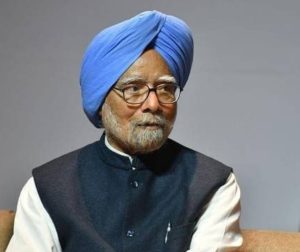
Frequently Asked Questions (FAQ)
When did Manmohan Singh serve as Prime Minister of India?
He served from 2004 to 2014.
What is Manmohan Singh best known for?
He is best known as the architect of India’s 1991 economic liberalization reforms while serving as finance minister, widely regarded as more historically significant than his premiership.
Was Manmohan Singh the first Sikh Prime Minister of India?
Yes, he was the first and remains the only Sikh Prime Minister of India.
When and how did Manmohan Singh die?
He died on 26 December 2024 at AIIMS Delhi, a few hours after collapsing at his home, at the age of 92.
What major scandals affected his second term as PM?
His government faced the 2G spectrum scam, the 2012 coal allocation scam, and the 2010 Commonwealth Games corruption scandal.
Where was he educated?
He earned degrees in economics from Panjab University and the University of Cambridge.
Also Read: Triveni Rao Biography
Conclusion
Manmohan Singh’s legacy resists easy categorization. He was simultaneously a technocrat thrust into populist politics, a reformer often labeled politically “weak,” and an economist whose 1991 decisions arguably did more to shape modern India than an entire decade as Prime Minister. His story is a reminder that quiet, data-driven leadership can leave as deep a mark as the loudest political movements.
What’s your view on Manmohan Singh’s legacy -economic reformer first, or Prime Minister first? Share your thoughts in the comments, or subscribe for more in-depth political biographies.
About The Author
