
Indira Gandhi Biography: Life, Political Career, Achievements, Assassination, and Legacy
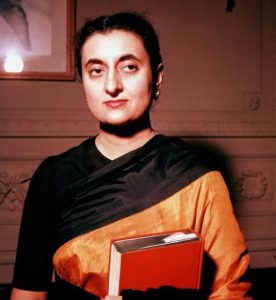
Indira Gandhi Biography: Life, Political Career, Achievements, Assassination, and Legacy
Table of Contents
Introduction
Indira Gandhi was one of the most influential and powerful political leaders in India’s history. As the country’s first and only female Prime Minister, she played a significant role in shaping modern India through her leadership, policies, and political decisions. Known for her determination, strong leadership style, and ability to navigate complex political challenges, Indira Gandhi left a lasting impact on Indian politics and global affairs.
Her political career spanned several decades, during which she led India through major events, including the Green Revolution, the Bangladesh Liberation War, the Emergency period, and numerous economic and social reforms. While admired by many for her decisive leadership, she also faced criticism and controversy during certain periods of her rule.
This biography provides a comprehensive look at Indira Gandhi’s life, examining her early years, political career, major achievements, challenges, and the lasting influence she had on India and the world.
Quick Facts About Indira Gandhi
Detail: Information
Full Name: Indira Priyadarshini Gandhi
Date of Birth: November 19, 1917
Place of Birth: Allahabad, British India
Nationality: Indian
Profession: Politician
Political Party: Indian National Congress
Father: Jawaharlal Nehru
Mother: Kamala Nehru
Spouse: Feroze Gandhi
Children: Rajiv Gandhi, Sanjay Gandhi
Position: Prime Minister of India
Years as Prime Minister: 1966–1977, 1980–1984
Date of Death: October 31, 1984
Indira Gandhi Early Life and Family Background
Indira Priyadarshini Gandhi was born on November 19, 1917, in Allahabad, Uttar Pradesh, during British colonial rule in India.
She was born into one of India’s most prominent political families. Her father, Jawaharlal Nehru, later became India’s first Prime Minister, while her grandfather, Motilal Nehru, was a respected lawyer and influential leader in the Indian independence movement.
Growing up in a politically active household exposed Indira to national affairs from an early age. She witnessed meetings with freedom fighters, political discussions, and the struggle against British rule.
These experiences played a major role in shaping her future political career.
Also Read: Michael Olise Biography: Age, Family, Career, Bayern Munich, Stats, and Life Story
Indira Gandhi Education
Indira Gandhi received her early education from various schools in India before continuing her studies abroad.
She attended:
- Modern School, Delhi
- St. Mary’s Convent School
- Pupils’ Own School, Pune
- Visva-Bharati University
- Somerville College, Oxford
Although her educational journey was interrupted by health issues and political developments, her exposure to international education broadened her understanding of politics, culture, and global affairs.
Alao Read: Abhijeet Dipke Biography: Age, Career, Family, Music Journey, and Achievements
Participation in India’s Independence Movement
Even as a young girl, Indira became involved in the Indian independence movement.
She organized a group known as the “Vanar Sena” (Monkey Brigade), which assisted freedom fighters by carrying messages and supporting nationalist activities.
Her involvement deepened during her father’s imprisonment by British authorities. These early experiences deepened her dedication to serving the nation and contributing to India’s growth and progress.
Indira Gandhi Marriage and Family Life
In 1942, Indira married Feroze Gandhi, a journalist and politician.
The couple had two sons:
- Rajiv Gandhi
- Sanjay Gandhi
Both sons later became significant figures in Indian politics, particularly Rajiv Gandhi, who eventually served as Prime Minister of India.
Despite the demands of public life, family remained an important aspect of Indira Gandhi’s personal journey.
Indira Gandhi Entry into Politics
Following India’s independence in 1947, Indira Gandhi increasingly became involved in political affairs.
She worked closely with her father, Jawaharlal Nehru, assisting him in various official capacities.
Her organizational skills and political understanding earned respect within the Indian National Congress.
In 1959, she became President of the Indian National Congress, further strengthening her position within the party.
Indira Gandhi Becoming Prime Minister of India
After the passing of Prime Minister Lal Bahadur Shastri in 1966, Indira Gandhi assumed office as India’s Prime Minister, marking the beginning of a historic chapter in the nation’s political history.
At the time, some political observers underestimated her abilities. However, she quickly demonstrated strong leadership and political independence.
Her appointment marked a historic moment, making her India’s first female Prime Minister.
Indira Gandhi Major Achievements
The Green Revolution
One of Indira Gandhi’s most significant achievements was supporting the Green Revolution.
The initiative introduced modern agricultural techniques, improved seeds, and better irrigation systems.
As a result:
- Agricultural production increased significantly.
- Food shortages declined.
- The country made significant progress toward achieving food self-sufficiency and reducing its reliance on imported agricultural products.
Indira Gandhi Bank Nationalization
In 1969, Indira Gandhi nationalized major banks.
The objective was to expand banking services and increase access to credit for rural populations and small businesses.
This policy remains one of the most discussed economic decisions in Indian history.
Bangladesh Liberation War (1971)
Perhaps her greatest foreign policy success came during the Bangladesh Liberation War.
India supported East Pakistan’s struggle for independence, which ultimately led to the creation of Bangladesh.
The military victory significantly enhanced India’s international standing and established Indira Gandhi as a respected global leader.
Real-World Examples of Her Impact
Case Study 1: Agricultural Transformation
Through the Green Revolution, millions of Indian farmers were able to improve agricultural productivity, helping the country reduce its dependence on imported food supplies.
Case Study 2: Expansion of Banking Access
Nationalization policies enabled banking services to reach underserved rural communities.
Case Study 3: Creation of Bangladesh
India’s role during the 1971 conflict reshaped South Asian geopolitics and contributed to the establishment of Bangladesh as an independent nation.
The Emergency (1975–1977)
One of the most controversial periods of Indira Gandhi’s leadership was the Emergency.
In June 1975, she declared a national Emergency, citing threats to national stability.
During this period:
- Civil liberties were restricted.
- Political opponents were arrested.
- Press censorship increased.
- Government powers expanded significantly.
Supporters argued that the Emergency improved administrative efficiency, while critics viewed it as a threat to democratic principles.
The Emergency remains one of the most debated chapters in Indian political history.
Indira Gandhi Return to Power
After losing the 1977 general election, many believed Indira Gandhi’s political career was over.
However, she made a remarkable comeback.
In 1980, she returned to power as Prime Minister following a decisive electoral victory.
Her return demonstrated her political resilience and enduring popularity among many voters.
Indira Gandhi Challenges During Her Final Years
The early 1980s presented significant challenges, including rising political tensions and security concerns.
One of the most significant events was Operation Blue Star in 1984, a military operation conducted at the Golden Temple in Amritsar to remove armed militants.
The operation generated widespread controversy and heightened tensions in parts of the country.
Indira Gandhi Assassination
On October 31, 1984, Indira Gandhi was assassinated by two of her bodyguards in New Delhi.
Her death shocked India and attracted international attention.
The assassination was linked to tensions arising from Operation Blue Star.
Following her death, India entered a period of national mourning.
Comparison: Early Leadership vs Later Leadership
Early Leadership vs Later Leadership
Focus on economic reforms: Focus on national security
Green Revolution initiatives: Managing political challenges
Expansion of welfare policies: Addressing internal conflicts
International diplomacy: Security and stability concerns
Building political authority: Defending established leadership
Indira Gandhi Awards and Recognition
Throughout her life, Indira Gandhi received numerous honors and recognitions.
Some notable distinctions include:
- Bharat Ratna (India’s highest civilian award)
- International recognition for leadership
- Recognition as one of the most influential women of the twentieth century
Her contributions continue to be studied by historians, political scientists, and leadership experts.
Indira Gandhi Legacy
Indira Gandhi’s legacy remains complex and influential.
Supporters remember her for:
- Strong leadership
- Economic reforms
- Agricultural development
- Foreign policy achievements
- National security initiatives
Critics often point to:
- The Emergency period
- Centralization of political power
- Restrictions on civil liberties during certain periods
Despite differing opinions, few would dispute her profound impact on Indian history.
Frequently Asked Questions
Who was Indira Gandhi?
Indira Gandhi was India’s first female Prime Minister and one of the country’s most influential political leaders.
Was Indira Gandhi related to Mahatma Gandhi?
No. Despite sharing the surname Gandhi, she was not directly related to Mahatma Gandhi.
How long was Indira Gandhi Prime Minister?
She served as Prime Minister from 1966 to 1977 and again from 1980 to 1984.
Who were Indira Gandhi’s children?
Her sons were Rajiv Gandhi and Sanjay Gandhi.
Why is Indira Gandhi famous?
She is known for her leadership during major national and international events, including the Green Revolution and the Bangladesh Liberation War.
How did Indira Gandhi die?
She was assassinated on October 31, 1984, by two of her bodyguards.
Conclusion
Indira Gandhi remains one of the most significant figures in modern Indian history. Her leadership transformed India’s political landscape and influenced major developments in agriculture, economics, foreign policy, and governance.
While her legacy continues to inspire debate, her impact on India and the world is undeniable. Through her achievements, challenges, and determination, she remains a central figure in discussions about leadership, power, and nation-building.
Sources
This biography is based on historical records, government archives, biographies, academic research, and reputable publications documenting the life and career of Indira Gandhi.
What do you think was Indira Gandhi’s most significant contribution to India? Share your thoughts in the comments below and subscribe for more detailed biographies of influential world leaders.
About The Author
