
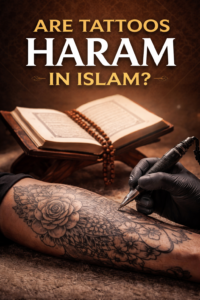
Are All Types of Tattoos Haram?
Introduction
Are Tattoos Haram in Islam? The question of whether tattoos are permissible or forbidden in Islam is one that continues to generate discussion among Muslims across the world. As body art becomes more popular globally, many Muslims, especially younger generations—find themselves asking: Are tattoos haram (forbidden) in Islam? The answer is not always presented in simple terms, as it involves religious texts, interpretations by scholars, and differences among Islamic schools of thought.
To understand this issue properly, one must examine the teachings of Islam, the guidance found in the Qur’an, and the sayings and actions of Prophet Muhammad (peace be upon him). Additionally, it is important to explore the reasoning behind Islamic rulings and how they are applied in modern contexts.
This article provides a comprehensive explanation of the topic, including classical rulings, scholarly interpretations, differences between permanent and temporary tattoos, and related concerns such as prayer and repentance.
What Does “Haram” Mean in Islam?
In Islamic law (Sharia), actions are classified into five categories: obligatory (fard), recommended (mustahabb), permissible (halal), disliked (makruh), and forbidden (haram). When something is labeled haram, it means it is strictly prohibited, and a Muslim is expected to avoid it.
The classification of tattoos as haram or halal depends on interpretations of religious texts and scholarly consensus. Most traditional scholars consider permanent tattoos to be haram, but understanding why is essential.
Also Read: Islamic Advice for a Happy and Peaceful Marriage
Evidence from Hadith on Tattoos
The primary evidence used by scholars regarding tattoos comes from the Hadith literature—records of the sayings and actions of Prophet Muhammad.
One of the most commonly cited narrations states that the Prophet (peace be upon him) cursed:
“The one who does tattoos and the one who has tattoos done.”
This Hadith is reported in authentic collections such as Sahih al-Bukhari and Sahih Muslim. Based on this narration, many scholars concluded that tattooing is forbidden.
Why Is This Hadith Important?
In Islamic jurisprudence, a curse (la’nah) indicates a serious prohibition. Therefore, scholars interpret this as strong evidence that tattooing is not merely disliked but forbidden.
The Concept of Altering Allah’s Creation
Another key argument against tattoos comes from the idea of altering the natural creation of Allah. The Qur’an mentions Satan’s promise to mislead humans into changing Allah’s creation.
Scholars interpret permanent tattoos as a form of unnecessary alteration of the body, which is considered a trust (amanah) from Allah. Since tattoos involve injecting ink into the skin permanently, they are viewed as a deliberate and lasting modification.
Why Are Tattoos Considered Haram by Most Scholars?
Permanent Alteration of the Body
Islam teaches that the human body is a gift from Allah and should not be altered unnecessarily. Tattoos permanently change the skin, which many scholars see as a violation of this principle.
Pain and Harm
Tattooing involves piercing the skin repeatedly, which can cause pain and potential health risks. Islam discourages self-harm, even if it is done for aesthetic reasons.
Association with Pre-Islamic Practices
Historically, tattoos were often associated with certain cultural or pagan practices. Early Islamic teachings sought to distinguish Muslims from such traditions.
Explicit Prohibition in Hadith
As mentioned earlier, the Hadith clearly condemns tattooing, making it a strong basis for prohibition.
Also Read: Riba (Interest): Why It’s Dangerous in Islam
Are All Types of Tattoos Haram?
Permanent Tattoos
There is broad agreement among Sunni scholars that permanent tattoos are haram. This includes tattoos that are injected under the skin and cannot be easily removed.
Temporary Tattoos
Temporary tattoos, such as those made with henna, are generally considered permissible. Henna has been traditionally used in Muslim cultures, especially for weddings and celebrations.
The key difference is that henna does not alter the skin permanently and does not involve piercing the body.
Tattoos in Different Islamic Schools of Thought
Sunni Perspective
The majority of Sunni scholars agree that permanent tattoos are haram based on the Hadith and the concept of altering Allah’s creation.
Shia Perspective
Some Shia scholars take a slightly different view. While many still discourage tattoos, some consider them permissible under certain conditions, especially if they do not cause harm or contain inappropriate imagery.
However, even within Shia Islam, opinions vary, and individuals are encouraged to consult knowledgeable scholars.
Can You Pray with a Tattoo in Islam?
One of the most common questions is whether a person with tattoos can perform Salah (prayer).
The Answer
Yes, a person with a tattoo can still pray, and their prayer is valid.
Why?
Tattoos are beneath the skin and do not form a barrier that prevents water from reaching the body during ablution (wudu). Therefore, they do not invalidate purification or prayer.
What If Someone Got a Tattoo Before Accepting Islam?
If a person had tattoos before becoming Muslim, they are not held accountable for actions committed before embracing Islam.
Islam teaches that conversion wipes away past sins. Therefore:
- The person does not need to remove the tattoo if removal would cause harm.
- Their faith and worship are fully accepted.
What About Repentance for Tattoos?
If a Muslim gets a tattoo after knowing the ruling, they are encouraged to repent sincerely.
Steps of Repentance in Islam
- Recognize the mistake
- Feel genuine remorse
- Stop the action
- Intend not to repeat it
If possible and safe, some scholars recommend removing the tattoo. However, if removal is harmful or too costly, sincere repentance is sufficient.
Is Tattoo Removal Required?
Tattoo removal is not always obligatory.
If removal:
- Causes significant pain or harm
- Is medically risky
- Is financially burdensome
Then it is not required.
Islam emphasizes ease and does not burden a person beyond their capacity.
Cultural vs Religious Views on Tattoos
In some cultures, tattoos are seen as a form of identity, art, or tradition. However, Islam distinguishes between cultural practices and religious guidelines.
Even if a practice is widely accepted culturally, Muslims are encouraged to evaluate it based on Islamic teachings.
Modern Perspectives and Changing Attitudes
In today’s world, tattoos are widely accepted and even celebrated in many societies. Social media, celebrities, and global trends have influenced attitudes toward body art.
Some modern scholars have revisited the issue, especially in light of:
- Advances in medical safety
- Changing cultural norms
- Different interpretations of religious texts
However, the majority opinion still leans toward prohibition of permanent tattoos.
Misconceptions About Tattoos in Islam
Misconception 1: Tattoos Make You Impure
This is incorrect. Tattoos do not make a person physically impure (najis).
Misconception 2: You Cannot Enter a Mosque with Tattoos
There is no rule منعing people with tattoos from entering a mosque.
Misconception 3: Your Prayers Are Invalid
As explained earlier, prayers remain valid even if a person has tattoos.
Ethical and Spiritual Considerations
Islam encourages modesty, humility, and self-respect. The body is considered a trust from Allah, and Muslims are encouraged to care for it responsibly.
For many scholars, tattoos raise questions about:
- Intentions behind body modification
- Influence of societal trends
- Respect for divine creation
These broader ethical considerations play a role in shaping the ruling.
Temporary Alternatives to Tattoos
For those interested in body art but concerned about religious rulings, there are permissible alternatives:
- Henna designs
- Washable body art
- Decorative jewelry
These options allow for self-expression without permanent alteration.
Also Read: How to Repent Sincerely in Islam (Tawbah Guide)
Balancing Faith and Personal Choice
For Muslims living in diverse societies, balancing religious beliefs with personal expression can be challenging.
Islam encourages:
- Seeking knowledge
- Consulting scholars
- Making informed decisions
Ultimately, each individual is responsible for their choices and their relationship with Allah.
Also Read:
Conclusion
The question “Are tattoos haram in Islam?” does not have a simplistic yes-or-no answer, but the majority of Islamic scholars agree that permanent tattoos are forbidden based on authentic Hadith and the principle of not altering Allah’s creation.
However, Islam is also a religion of mercy and understanding. Those who already have tattoos are not excluded from worship, and their prayers remain valid. Repentance is always available, and past actions can be forgiven.
Temporary tattoos, such as henna, are widely accepted and offer a halal alternative for self-expression.
In the end, Muslims are encouraged to seek knowledge, reflect on their intentions, and make choices that align with their faith. Understanding the reasoning behind Islamic rulings helps individuals navigate modern challenges while staying connected to their religious values.
About The Author
