
Robert McBride Biography by “SOLO GIKZ“
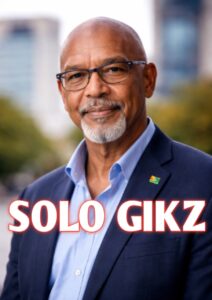
Robert McBride Biography: From Revolutionary to Reformer in South Africa’s Tumultuous Journey. In the complex tapestry of South Africa’s modern history, few figures embody its contradictions, struggles, and transformations as vividly as Robert McBride. A man once branded a terrorist and later entrusted with upholding the law, McBride’s life is a compelling narrative of resistance, redemption, and reinvention. From his days as a freedom fighter in the armed wing of the African National Congress (ANC) to his controversial tenure in law enforcement, McBride’s journey mirrors the evolution of a nation grappling with its past while striving for justice and democracy.
Robert McBride Early Life and Political Awakening
Robert McBride was born on July 6, 1963, in Durban, South Africa, into a family of mixed racial heritage classified under apartheid as “Coloured.” His father, Derrick McBride, was a politically conscious man who had experienced racial discrimination firsthand. These early experiences of systemic injustice deeply influenced Robert’s worldview. Growing up in a racially segregated society, McBride was acutely aware of the inequalities that defined South African life. He attended Chatsworth High School, where he began to engage with political literature and anti-apartheid activism. His early exposure to the writings of revolutionary thinkers and the lived experiences of oppression laid the foundation for his future as a militant activist.
Robert McBride Umkhonto we Sizwe and the Struggle Against Apartheid
In the 1980s, as the apartheid regime intensified its crackdown on dissent, McBride joined Umkhonto we Sizwe (MK), the armed wing of the ANC. MK was formed in 1961 in response to the increasing brutality of the apartheid state, which had banned peaceful protest and imprisoned leaders like Nelson Mandela.
McBride quickly rose through the ranks of MK due to his intelligence, courage, and commitment. He became involved in several covert operations aimed at destabilizing the apartheid regime. His most infamous mission came in 1986, when he led a bombing operation at Magoos Bar in Durban, a popular hangout for off-duty white security personnel.
The bombing killed three white women and injured dozens. McBride was arrested, tried, and convicted of terrorism. He was sentenced to death, a punishment that sparked international outrage and calls for clemency.
Amnesty and the Truth and Reconciliation Commission
In 1992, after spending several years on death row, McBride was released as part of the political negotiations that would eventually dismantle apartheid. His release was controversial, many viewed him as a hero of the liberation struggle, while others saw him as a murderer.
In the post-apartheid era, McBride applied for and was granted amnesty by the Truth and Reconciliation Commission (TRC). The TRC, established under the Promotion of National Unity and Reconciliation Act, recognized that acts of violence committed in pursuit of a political objective during apartheid could be forgiven in the interest of national healing.
The TRC’s decision to grant McBride amnesty was based on the principle that his actions, though violent, were politically motivated and part of a broader struggle against an unjust system. This legal and moral absolution allowed McBride to re-enter public life, but the shadows of his past would never fully disappear.
Robert McBride Transition to Law Enforcement
In a remarkable twist of fate, Robert McBride transitioned from revolutionary to law enforcer. In 2003, he was appointed as the Chief of the Ekurhuleni Metropolitan Police Department (EMPD), a position he held until 2006. His appointment was met with both praise and criticism. Supporters saw it as a symbol of transformation and reconciliation; detractors questioned the morality of placing a former bomber in a position of authority. During his tenure, McBride focused on combating corruption and improving police accountability. He implemented reforms aimed at professionalizing the force and reducing crime in the municipality. However, his time at EMPD was not without controversy.
In 2006, McBride was involved in a car accident after a Christmas party. Allegations surfaced that he had been driving under the influence and that his subordinates had attempted to cover up the incident. He was charged with drunk driving and defeating the ends of justice. Though he was initially convicted, the charges were later overturned on appeal.
Robert McBride Leadership at the Independent Police Investigative Directorate (IPID)
In 2014, McBride was appointed as the Executive Director of the Independent Police Investigative Directorate (IPID), the watchdog agency responsible for investigating police misconduct in South Africa. This role placed him at the center of some of the country’s most sensitive and high-profile investigations. Under McBride’s leadership, IPID pursued cases involving police brutality, corruption, and abuse of power. He was instrumental in exposing misconduct within the South African Police Service (SAPS) and the State Security Agency (SSA). His tenure was marked by a fierce commitment to accountability, often putting him at odds with powerful political figures.
In 2015, McBride was suspended by then-Police Minister Nathi Nhleko, who accused him of tampering with an investigation. McBride challenged the suspension in court and won, with the Constitutional Court ruling that the minister had acted unlawfully. The case was a landmark moment for the independence of oversight institutions in South Africa.
Robert McBride Legal Battles and Political Intrigue
McBride’s career has been punctuated by legal battles and political intrigue. He has often found himself at the center of power struggles between reformists and entrenched interests within the state. His unwavering stance on corruption and abuse of power has earned him both admirers and enemies. In 2019, his contract as IPID head was not renewed by the government, a move widely seen as politically motivated. McBride later testified before the Zondo Commission of Inquiry into State Capture, where he detailed how law enforcement agencies had been compromised during the presidency of Jacob Zuma.
His testimony was damning and painted a picture of systemic rot within the intelligence and policing sectors. McBride’s revelations were instrumental in shaping public understanding of state capture and the need for institutional reform.
Robert McBride Personal Life and Public Perception
Robert McBride is a deeply private man, despite his public persona. He is known for his stoic demeanor, intellectual rigor, and moral conviction. He has three daughters and has spoken about the challenges of balancing his personal life with the demands of public service. His legacy is complex. To some, he is a hero who risked everything to fight apartheid and later dedicated his life to justice and reform. To others, he remains a controversial figure whose past actions cannot be overlooked.
What is undeniable is that McBride has lived a life of extraordinary consequence. He has been a soldier, a prisoner, a police chief, and a whistleblower. His journey reflects the broader story of South Africa, a nation wrestling with its past while striving for a more just future.
Also Read: Grace, Grit, and Governance: The story of Aparna Yadav
Robert McBride Legacy and Impact
Robert McBride’s impact on South African society is profound. He has: Challenged the abuse of power within law enforcement. Exposed corruption at the highest levels of government. Defended the independence of oversight institutions. Contributed to the national dialogue on justice, reconciliation, and accountability
His life raises important questions about redemption, justice, and the role of former revolutionaries in democratic societies. Can a man once convicted of terrorism become a guardian of the law? Can a nation truly reconcile with its past without confronting uncomfortable truths?
McBride’s story does not offer easy answers, but it forces us to ask the right questions.

Final Thoughts
Robert McBride’s biography is not a tale of perfection, it is a story of transformation. It is about a man who has walked through fire, both literal and metaphorical, and emerged with his principles intact. It is about the messy, painful, and necessary work of building a just society.
In a world where integrity is often sacrificed for convenience, McBride stands as a reminder that courage is not the absence of controversy, it is the willingness to face it head-on.
His life is a testament to the power of conviction, the possibility of redemption, and the enduring struggle for justice in a world that too often forgets its own history.
About The Author
