
Emmanuel Macron Biography by “SOLO GIKZ“
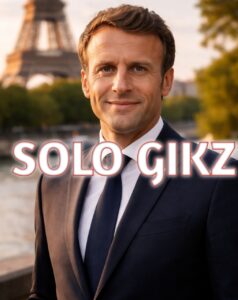
Emmanuel Macron: In December 2018, French President Emmanuel Macron appeared in public and on television with a noticeably red, bloodshot left eye that quickly became the subject of intense media attention and public speculation. The incident, which became known as “l’oeil rouge” (the red eye) in French media, occurred during one of the most tumultuous periods of Macron’s presidency, amid the massive “Gilets Jaunes” (Yellow Vests) protests that had been sweeping across France.
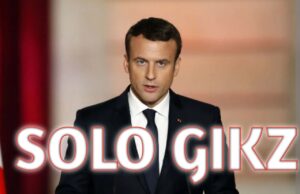
The striking visual of the president with his severely reddened eye appeared during an important televised address to the nation on December 10, 2018. Macron was attempting to respond to the growing social unrest and announce measures to appease the protesters. However, instead of the speech’s content dominating headlines and social media discussions, much of the attention focused on his dramatically bloodshot eye.
The condition was immediately visible and concerning in appearance. The white of Macron’s left eye showed significant redness and irritation, creating a stark contrast with his otherwise composed presidential appearance. The image spread rapidly across social media platforms, news websites, and television broadcasts, generating widespread commentary, speculation, and in some cases, mockery.
Emmanuel Macron Official Explanation and Medical Context
The Élysée Palace, the official residence of the French president, quickly moved to provide an explanation for Macron’s condition. According to official statements, the president’s red eye resulted from a minor medical issue that was not serious or concerning. Specifically, presidential spokesperson indicated that Macron had developed a condition affecting the blood vessels in his eye.
The medical explanation provided suggested the president was suffering from a subconjunctival hemorrhage, a condition where a small blood vessel breaks beneath the clear surface of the eye (the conjunctiva). This relatively common and usually benign condition causes dramatic visible redness because blood spreads beneath the transparent conjunctiva, but typically causes no pain or vision impairment and resolves on its own within one to two weeks.
Subconjunctival hemorrhages can occur spontaneously or result from various triggers including straining, coughing, sneezing, rubbing the eye too vigorously, minor trauma, sudden increases in blood pressure, or sometimes without any identifiable cause. In most cases, they are harmless and require no treatment beyond monitoring.
Medical experts consulted by French media confirmed that such conditions, while visually striking, are generally not indicators of serious health problems in otherwise healthy individuals. The condition does not typically affect vision or cause significant discomfort, though it can create a alarming appearance that takes several days to fully resolve as the body reabsorbs the leaked blood.
The timing of the incident, however, fueled speculation beyond simple medical explanations. The red eye appeared during an extraordinarily stressful period for Macron’s presidency, leading some to wonder if stress, fatigue, or the intense pressures he faced might have contributed to the condition.
Also Read: From Radio Waves to Plant Whispers: The Revolutionary Life of Jagadish Chandra Bose
Emmanuel Macron Political Context
To fully understand the significance of the “oeil rouge” incident, one must appreciate the political context in which it occurred. In late 2018, France was experiencing its most significant social upheaval in decades through the Gilets Jaunes (Yellow Vests) movement.
The protests began in November 2018, initially triggered by planned fuel tax increases but quickly expanding into broader expressions of discontent with Macron’s economic policies, perceived elitism, and what protesters saw as disconnection from ordinary French citizens’ concerns. The movement drew participants from diverse backgrounds, united by feelings of economic struggle, geographical marginalization, and political alienation.
The protests were characterized by significant violence in some instances, with clashes between protesters and police, vandalism in Paris and other cities, and disruption of normal economic and social activities. Images of burning cars, damaged storefronts, and confrontations on the Champs-Élysées dominated international news coverage, presenting France as a nation in crisis.
For Macron, elected in 2017 as a youthful reformer promising to modernize France, the Yellow Vests represented a severe political challenge. His approval ratings plummeted to historic lows, his reform agenda stalled, and his image transformed from dynamic young leader to out-of-touch elitist in many citizens’ perceptions.
The president faced intense pressure to respond to the crisis while maintaining authority and not appearing to completely capitulate to protest demands. His December 10, 2018 televised address was meant to be a pivotal moment, announcing significant policy concessions while attempting to restore calm and reassert leadership.
Emmanuel Macron Symbolism and Public Interpretation
The appearance of Macron’s red eye during this critical address took on symbolic dimensions far beyond its medical significance. For critics and protesters, the bloodshot eye became a visual metaphor for various interpretations of the political situation.
Some viewed it as symbolic of violence, connecting the president’s appearance to the violence characterizing the protests and the aggressive police responses that had injured numerous protesters. In this interpretation, the red eye represented blood spilled during the confrontations, creating a visual link between Macron and the conflict.
Others interpreted the red eye as evidence of extreme stress and fatigue, suggesting the president was physically breaking down under the pressure of the crisis he faced. This reading portrayed Macron as overwhelmed, struggling to cope with challenges that exceeded his capabilities.
For some, the dramatic appearance undermined the authority and composure Macron sought to project. Presidential communication relies heavily on visual presentation, and the striking redness created a distraction that weakened his message’s impact. Instead of appearing strong and in control, he looked potentially vulnerable or unwell.
The incident also spawned numerous conspiracy theories on social media and fringe websites. Some speculated about hidden health problems, physical altercations, or other dramatic explanations that lacked any credible evidence. While such theories remained marginal, they demonstrated how a simple medical issue could fuel wild speculation in the digital age.
Political opponents and satirists seized on the image for mockery and criticism. Memes proliferated across social media, doctored images circulated, and comedians incorporated the red eye into jokes about Macron’s political difficulties. This mockery, while perhaps inevitable in contemporary political culture, further complicated the president’s attempts to control the narrative around his response to the crisis.
Emmanuel Macron Media Coverage and Digital Amplification
The “oeil rouge” incident demonstrated how contemporary media dynamics can transform a minor personal health issue into a major talking point. Traditional media outlets covered the story extensively, with newspapers, television news, and radio programs discussing the president’s appearance alongside the policy content of his address.
International media also picked up the story, with outlets in Britain, Germany, the United States, and elsewhere reporting on Macron’s red eye. This global attention amplified what might have remained a minor domestic footnote, making it part of the international narrative about French political instability.
Social media platforms played a crucial role in spreading and amplifying the story. On Twitter, Facebook, and Instagram, images of Macron’s red eye circulated rapidly, accompanied by commentary ranging from genuine concern to mockery to political criticism. Hashtags related to the incident trended in France and beyond.
The digital nature of modern media meant the image could be screenshot, shared, memed, and manipulated instantly. Graphic designers created various versions, exaggerating the redness, adding dramatic effects, or combining the image with other political imagery. This creative engagement, while often humorous, kept the story alive beyond its natural news cycle.
The incident also highlighted how physical appearance continues to matter in political communication despite increased sophistication about image management. Politicians invest heavily in controlling their visual presentation, understanding that appearance influences public perception perhaps as much as substance. An uncontrolled element like a bloodshot eye disrupts this careful management.
Media analysts noted that the red eye story partially overshadowed discussion of Macron’s actual policy announcements, which included significant concessions such as minimum wage increases and tax relief. This demonstrated how visual elements can dominate political communication, sometimes to the detriment of substantive policy discussion.
Macron’s Response and Management
President Macron and his team handled the situation with relative efficiency, providing a medical explanation quickly and then attempting to refocus attention on policy matters. The Élysée Palace’s transparency about the minor medical issue helped prevent more elaborate speculation from taking root among mainstream audiences.
Macron himself did not dwell on the issue publicly, maintaining focus on the political crisis and his proposed solutions. This professional response demonstrated political discipline, acknowledging the obvious without allowing it to derail his broader communication objectives.
In subsequent public appearances, as the condition naturally resolved over the following days, Macron’s eye gradually returned to normal, and media attention shifted back to policy and political developments. The incident became a footnote rather than a defining moment, though it remained part of the broader narrative about this tumultuous period.
The president’s team likely drew lessons about crisis management and the unpredictable nature of political communication. Even with sophisticated media strategies and careful planning, uncontrollable human elements can disrupt messaging and create unexpected challenges.
Emmanuel Macron Broader Implications and Reflections
The “oeil rouge” incident, while seemingly minor, offers insights into several aspects of contemporary politics and media. It demonstrates the intense scrutiny political leaders face, where even minor personal health issues become public talking points. The boundary between public and private largely disappears for major political figures, with every visible aspect of their appearance subject to analysis and commentary.
The incident also reflects how visual imagery dominates modern political communication. In an age of social media, television, and digital photography, political messages are inseparable from visual presentation. A striking image can overwhelm even important policy announcements, as happened with Macron’s December 2018 address.
The role of stress and physical demands of political leadership also emerged as a subtext. The presidency of a major nation like France involves enormous pressure, long hours, constant scrutiny, and high-stakes decision-making. Whether or not stress contributed to Macron’s red eye, the incident reminded observers of the human toll such positions exact.
The amplification of the story through social media and digital platforms illustrated how contemporary information ecosystems can magnify and distort even minor incidents. What previous generations might have barely noticed became a major topic of discussion and mockery, demonstrating both the democratization of political commentary and the challenges this creates for political communication.
Also Read: Harshit Rana Biography: Beginning, Domestic Grind, IPS Breakthrough, Style of Play, Off the Field.
Historical Context of Presidential Health and Appearance
Throughout political history, leaders’ health and appearance have been subjects of public interest and speculation. The “oeil rouge” incident fits within this broader pattern, though amplified by modern media dynamics.
Historical examples include American President Franklin D. Roosevelt’s concealment of the full extent of his paralysis, French President François Mitterrand’s hidden cancer diagnosis, and various other instances where leaders’ health became politically significant. The expectation that leaders appear strong and healthy creates pressure to minimize or conceal health issues, even minor ones.
Modern transparency expectations have shifted this dynamic somewhat. Contemporary leaders generally cannot hide health issues as easily as predecessors, given constant media coverage and public scrutiny. However, this transparency also means minor issues receive disproportionate attention.
The visual focus on political leaders’ appearance has intensified with television and digital media. Every facial expression, gesture, and physical characteristic becomes subject to analysis, often being interpreted for deeper meaning about capability, authenticity, or character.
Conclusion
Emmanuel Macron’s “oeil rouge” incident of December 2018 represents a fascinating intersection of politics, media, medicine, and public perception. What was medically a minor and common condition became, briefly, a significant talking point in French and international political discourse.
The incident occurred at a critical moment in Macron’s presidency, during the Yellow Vests crisis when he faced unprecedented political pressure. The dramatic visual of his bloodshot eye during a crucial address to the nation created an image that competed with and sometimes overwhelmed the substantive policy content he sought to communicate.
While the red eye itself held no serious medical significance and resolved naturally within days, its symbolic resonance and media amplification gave it temporary importance beyond its intrinsic meaning. It served as a reminder that political communication occurs across multiple dimensions verbal, visual, symbolic and that leaders cannot fully control all these elements simultaneously.
The incident also demonstrated characteristic features of contemporary political culture: the intense scrutiny of leaders’ every visible aspect, the power of visual imagery to dominate political narratives, the role of social media in amplifying and transforming political moments, and the challenges leaders face in managing their public image amid unpredictable personal circumstances.
Ultimately, the “oeil rouge” became a memorable but not defining moment in Macron’s presidency. It remains part of the broader story of the Yellow Vests period, a colorful detail in a tumultuous chapter of French politics. The incident passed, Macron’s eye healed, and the political challenges continued, a reminder that while individual moments capture attention, broader political dynamics ultimately matter more in shaping leaders’ legacies and nations’ trajectories.
For observers of politics and media, the incident offers valuable lessons about how minor personal circumstances can intersect with major political moments, how visual elements shape political communication, and how the contemporary media environment amplifies and transforms political narratives in ways both predictable and surprising.
About The Author
