

Some musicians are remembered for their chart positions, others for their image. Chris Rea belongs to a different category entirely. He is remembered for atmosphere, emotion, and a voice that sounds like it has lived many lives. Over several decades, Chris Rea has built a career defined not by noise or controversy but by authenticity. His music feels like a long road at dusk, reflective and honest, shaped by experience rather than trend.
This biography explores the life and career of Chris Rea in a calm, informative, and timeless way—highlighting how he became one of Britain’s most distinctive musical storytellers.
Early Life and Background
Christopher Anton Rea was born on March 4, 1951, in Middlesbrough, a town in North East England known more for industry than the arts. He grew up in a working-class household, where discipline, responsibility, and routine were part of everyday life. His father ran an ice cream business, and young Chris spent time helping out, learning the value of hard work long before music entered his world.
Unlike many musicians who grow up surrounded by instruments, Chris Rea’s introduction to music came relatively late. His early years were not marked by musical ambition but by observation. He absorbed the sounds of his environment, the emotions of people around him, and the quiet stories of ordinary life, elements that would later define his songwriting.
Also Read: Xoli Mfeka
Discovering Music and the Guitar
Chris Rea did not begin playing the guitar seriously until his late teens. This late start became an unexpected strength. Without formal training or early pressure, he developed a natural, expressive style. He gravitated toward blues music, drawn to its honesty and emotional depth rather than technical perfection.
Slide guitar, in particular, became central to his sound. Instead of focusing on speed or complexity, Rea used the guitar as a voice, letting notes breathe and linger. This approach aligned perfectly with his growing interest in storytelling through music.
Early Career and Industry Challenges
Entering the music industry in the 1970s, Chris Rea faced challenges common to many emerging artists. While record labels recognized his talent, they often pushed him toward a more commercial sound. This created tension between artistic expression and market expectations.
His early releases gained attention, especially with songs that showcased his melodic instincts and emotional depth. However, success was gradual rather than immediate. Rea’s journey during this period was shaped by persistence, learning, and a growing desire for creative independence.
Breakthrough and Wider Recognition
Chris Rea’s breakthrough came as audiences began connecting deeply with his music. Songs like Fool (If You Think It’s Over) introduced his work to international listeners and established him as a serious songwriter with a unique voice.
Throughout the 1980s, Rea released a series of albums that solidified his reputation. His music stood out not because it followed trends but because it felt sincere. While many artists focused on spectacle, Rea focused on mood, melody, and meaning. His gravelly voice, once considered unconventional, became one of his greatest strengths.
Musical Style and Artistic Identity
Chris Rea’s sound is often described as a blend of rock and blues, but labels alone cannot fully capture it. His music is atmospheric, reflective, and rooted in emotion. Roads, journeys, distance, love, and self-discovery are recurring themes, giving his songs a cinematic quality.
His slide guitar playing is subtle and expressive, often serving the story rather than dominating it. Combined with his voice, it creates music that feels intimate, as though the listener is being spoken to directly.
Also Read: Ishan Kishan
Personal Experiences and Health Challenges
In the 1990s, Chris Rea faced serious health challenges that required major medical intervention. These experiences forced him to slow down and reconsider his priorities. For many artists, such moments can mark the end of a career. For Rea, they marked a transformation.
Recovery gave him clarity. He stepped away from industry pressure and reconnected with the blues influences that first inspired him. This period reshaped his relationship with music, turning it into a form of personal expression rather than commercial pursuit.
Artistic Freedom and Reinvention
Following his recovery, Chris Rea entered a new phase of creativity. He released music that leaned heavily into blues, raw emotion, and storytelling. Free from external expectations, he explored sounds and themes that felt true to him.
He also took greater control of his work by releasing music independently. This move allowed him to experiment without compromise and reinforced his reputation as an artist guided by integrity rather than trends.
Beyond Music: Visual Art and Film
Chris Rea’s creativity extends beyond music. Over the years, he has explored visual art and filmmaking, using these mediums as additional ways to tell stories. These pursuits reflect his broader artistic vision and his belief that creativity should not be confined to a single form.
Rather than seeking constant public attention, Rea has allowed his work to speak for itself, maintaining a quiet but respected presence in the creative world.
Personal Life and Values
Chris Rea is known for valuing privacy. He has kept his personal life largely out of the public eye, choosing a grounded lifestyle over celebrity culture. This discretion has helped preserve the authenticity of his work and his connection to his audience.
His life reflects balance—between creativity and reflection, ambition and humility. These values are evident not only in his music but also in how he has navigated fame.
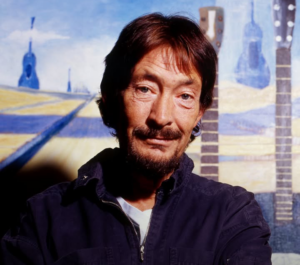
Influence and Legacy
Chris Rea’s influence lies not in imitation but in inspiration. He showed that success can be built on patience, honesty, and emotional depth. Younger musicians often cite his ability to create atmosphere and tell stories through sound as a lasting influence.
His songs continue to resonate with listeners who appreciate music that feels lived-in and real. In an industry often driven by novelty, Rea’s longevity stands as proof that authenticity endures.
Final Thoughts
The biography of Chris Rea is not a story of overnight fame or constant headlines. It is the story of an artist who trusted his instincts, embraced resilience, and remained true to his voice. From a late start in music to international recognition and creative independence, his journey reflects quiet strength and artistic courage.
Chris Rea’s legacy lives in songs that feel like conversations, roads that lead inward, and music that grows richer with time. His work reminds listeners that the most powerful art often comes from honesty, patience, and the courage to follow one’s own path.
Also Read: Mia Khalifa