
Jagadish Chandra Bose Biography by “SOLO GIKZ”
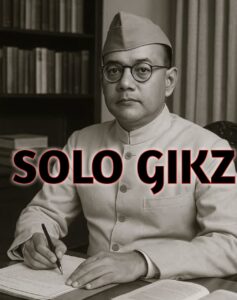
Jagadish Chandra Bose was born on November 30, 1858, in Mymensingh, now part of Bangladesh but then within Bengal Presidency under British colonial rule. His birth occurred during a transformative period in Indian history, when traditional society confronted Western education and scientific thinking. His father, Bhagawan Chandra Bose, served as a Deputy Magistrate and later as an Assistant Commissioner, representing the emerging class of educated Indians working within the colonial administrative framework.
Bhagawan Chandra was a man of progressive outlook who believed deeply in the value of education and cultural pride. Despite his position in the British administration, he maintained strong connections to Indian traditions and refused to accept the notion of European superiority. This balanced perspective profoundly influenced young Jagadish, who grew up respecting both Western scientific achievement and Eastern philosophical wisdom.
Young Jagadish’s early education took an unusual path for someone of his social standing. Rather than immediately enrolling him in an English-medium school, his father deliberately sent him to a Bengali-medium village school. Bhagawan Chandra wanted his son to understand his own culture and language, to know the common people of his land, and to develop empathy for those less privileged. This decision proved formative, as Jagadish later credited these early years with teaching him humility and connection to his roots.
At the village school, Jagadish studied alongside children from various backgrounds, including those from farming families and artisan communities. He learned in Bengali, absorbed local folklore and traditions, and developed an appreciation for indigenous knowledge systems. His father would explain that knowing one’s own people and heritage was essential before engaging with foreign cultures and ideas. This early grounding in indigenous culture would later influence Bose’s scientific work and his determination to prove that Indian scientists could match or exceed European achievements.
Also Read: Harshit Rana Biography: Beginning, Domestic Grind, IPS Breakthrough, Style of Play, Off the Field.
Jagadish Chandra Bose Academic Journey and Educational Foundations
After his foundational years in the village school, Jagadish enrolled in Hare School in Calcutta, one of the premier educational institutions of that era. Here he encountered rigorous Western-style education, excelling in languages, sciences, and mathematics. The transition from Bengali to English medium presented challenges, but his earlier solid education helped him adapt successfully.
In 1875, at age seventeen, Jagadish joined St. Xavier’s College in Calcutta, a Jesuit institution known for academic excellence. Here he came under the influence of Father Eugene Lafont, a Jesuit priest and science teacher who recognized and nurtured Jagadish’s scientific aptitude. Father Lafont maintained a excellent laboratory and encouraged hands-on experimentation, an approach that captivated young Bose. Under Lafont’s mentorship, Jagadish developed his experimental skills and deepened his passion for physics and natural sciences.
After graduating from St. Xavier’s College with distinction, Bose faced a critical decision about his future. Despite his father’s wish for him to join the Indian Civil Service, the most prestigious career path for educated Indians at that time, Jagadish felt drawn to scientific pursuits. His father, though initially disappointed, ultimately supported his son’s passion, even though science offered far fewer opportunities and lower prestige for Indians under colonial rule.
In 1880, Bose traveled to England to pursue higher studies, enrolling at Christ’s College, Cambridge University. This journey represented a significant undertaking, both financially and personally. At Cambridge, he studied Natural Sciences Tripos, specializing in physics, chemistry, and botany. His time at Cambridge coincided with a golden age of British science, and he attended lectures by some of the era’s greatest minds.
However, his time in England was not without difficulties. Bose fell seriously ill, possibly with malaria or another tropical disease that had remained dormant. The illness forced him to suspend his studies temporarily and left him weakened for some time. Despite these health setbacks, he persevered and passed his Natural Sciences Tripos examination.
After completing his degree at Cambridge, Bose moved to London, where he enrolled at London University to pursue a Bachelor of Science degree, which he obtained. He then attended University College London to study under renowned physicist Professor John William Strutt (Lord Rayleigh), deepening his understanding of electromagnetic theory and experimental physics.
Jagadish Chandra Bose Return to India and Academic Struggles
In 1884, Bose returned to India with excellent academic credentials and high hopes for contributing to scientific advancement in his homeland. However, he soon encountered the harsh realities of racial discrimination in colonial India’s academic institutions. He was appointed Assistant Professor of Physics at Presidency College in Calcutta, but the position came with significant indignities.
The British administration offered him a salary substantially lower than that paid to European professors, despite equivalent or superior qualifications. This discriminatory practice reflected the colonial attitude that Indians were inherently inferior and deserved less compensation regardless of merit. The injustice wounded Bose deeply, not merely because of the financial impact but because it represented systematic denial of equal treatment and recognition.
In an act of remarkable principle and courage, Bose refused to accept the discriminatory salary. For three years, he continued teaching without accepting any payment whatsoever, living on his savings and family support. He did this not from personal pride but as a protest against the institutionalized racism of the colonial system. He wanted to prove that his commitment to teaching and science transcended monetary considerations and that he would not accept treatment suggesting his work was worth less due to his race.
This prolonged protest finally bore fruit. The authorities, impressed by his dedication and perhaps embarrassed by his principled stand, eventually granted him full professorial salary retroactive to his appointment date. This victory was not merely personal but represented a small crack in the edifice of colonial discrimination, demonstrating that principled resistance could achieve results.
At Presidency College, Bose faced another challenge: the lack of adequate laboratory facilities and equipment. Unlike well-funded European institutions, Indian colleges operated with minimal resources. Rather than accepting these limitations, Bose demonstrated remarkable ingenuity by fabricating much of his own apparatus from locally available materials. This necessity-driven innovation actually enhanced his experimental skills and understanding of instrument design.
Jagadish Chandra Bose Pioneering Research in Radio Waves
During the 1890s, Bose began his groundbreaking research into electromagnetic waves, work that would establish him as a pioneer in wireless communication. He was fascinated by Heinrich Hertz’s recent demonstration of electromagnetic waves and determined to extend this research into millimeter wavelengths, a frontier area at that time.
Working with self-made equipment in his modest laboratory, Bose achieved remarkable breakthroughs. By 1895, he had succeeded in generating and detecting millimeter-range radio waves, demonstrating their properties through various experiments. He developed several innovative instruments, including the coherer, a device for detecting radio waves that was more sensitive and reliable than existing versions.
In November 1895, about a year before Guglielmo Marconi’s famous demonstration, Bose gave a public demonstration of wireless signaling in Calcutta. He transmitted electromagnetic waves across a significant distance, rang a bell remotely, and even ignited gunpowder from a distance using wireless signals. The demonstration occurred in the presence of the Lieutenant Governor and other dignitaries, creating considerable excitement.
Bose’s work on radio waves was truly pioneering. He explored extremely short wavelengths (in the millimeter range), anticipating work that would not become mainstream for several decades. He investigated how these waves behaved when passing through various materials, how they could be reflected and refracted, and how their polarization could be controlled. His research had profound implications for understanding electromagnetic phenomena.
In 1896, Bose traveled to England and presented his research to the Royal Society and other scientific bodies. His demonstrations impressed leading British scientists, and he published his findings in prestigious journals. Scientists like Lord Rayleigh and Lord Kelvin expressed admiration for his work. The scientific community recognized that this Indian physicist working with minimal resources had made genuine contributions to the cutting edge of physics.
However, Bose made a decision that would later be debated by historians: he did not patent his inventions. His approach to science was rooted in the ideal that knowledge should be freely shared for humanity’s benefit rather than commercialized for personal profit. He believed that putting scientific discoveries behind patent walls contradicted the true spirit of scientific inquiry. While this noble stance reflected his high-minded principles, it also meant that others, particularly Marconi, received commercial benefits and historical credit for wireless technology that Bose had independently developed.
Jagadish Chandra Bose Revolutionary Research on Plant Physiology
Around 1900, Bose began shifting his primary research focus from physics to plant physiology, the field for which he would become most famous. This transition was not as abrupt as it might appear, as Bose saw fundamental unity in nature and believed that similar principles governed both living and non-living matter.
Bose’s revolutionary hypothesis was that plants possess a form of nervous system and respond to external stimuli in ways analogous to animals. This idea challenged the prevailing scientific orthodoxy that drew sharp distinctions between plant and animal life. Most scientists believed plants were essentially passive organisms lacking any capacity for sensation or response comparable to animal nervous systems.
To investigate plant responses, Bose designed extraordinarily sensitive instruments capable of detecting and recording minute movements and changes in plants. His most famous invention was the Crescograph, an instrument that could magnify plant growth movements up to ten million times, making visible processes that occurred far too slowly for normal observation. The Crescograph revealed that plants grew not in smooth continuous motion but in a series of minute pulses, suggesting an underlying rhythmic vital process.
Bose conducted thousands of experiments demonstrating that plants responded to various stimuli including light, heat, cold, injury, and electrical currents. He showed that when plants were subjected to harmful stimuli like burns, cuts, or poisons, they exhibited responses remarkably similar to animal pain responses, including measurable electrical changes and altered growth patterns. When subjected to chloroform or other anesthetics, plants showed reduced responsiveness, just as animals did.
His experiments with metal fatigue proved particularly controversial. Bose demonstrated that metals subjected to repeated stimulation showed progressive “fatigue” and “recovery” patterns strikingly similar to biological muscle tissue. This suggested that the boundary between living and non-living matter might be less absolute than commonly believed, that fundamental responsive properties existed across this supposed divide.
The scientific establishment, particularly in Britain, initially greeted these findings with considerable skepticism. Many botanists and physiologists found Bose’s claims too radical, challenging fundamental assumptions about the nature of life. Some criticized his methodology, questioned his interpretations, or suggested that observed responses resulted from purely mechanical or chemical processes without implying any sentience or awareness in plants.
Despite this resistance, Bose persisted with meticulous experimentation and careful documentation. He refined his instruments, repeated experiments under various conditions, and invited skeptics to witness demonstrations personally. Gradually, his painstaking work convinced many scientists. By the early twentieth century, his contributions to plant physiology gained widespread recognition, though debates about interpretation continued.
Jagadish Chandra Bose Literary Contributions and Science Communication
Beyond his laboratory work, Bose was an accomplished writer who made significant contributions to science communication. He wrote both in English and Bengali, making scientific concepts accessible to broader audiences. His Bengali science writing was particularly important, demonstrating that complex scientific ideas could be expressed in Indian languages with precision and elegance.
His book “Response in the Living and Non-Living” published in 1902, presented his research findings to the scientific community. The work meticulously documented his experiments and advanced his unified theory of responsiveness across living and non-living matter. Though controversial, the book was recognized as serious scientific work addressing fundamental questions about life.
Bose also wrote popular science essays and lectures that inspired countless young Indians to pursue scientific careers. He believed strongly that science should not remain confined to elite academic circles but should engage public imagination. His public lectures in Calcutta and other cities attracted large audiences fascinated by his demonstrations of plant sensitivity and wireless communication.
His writing style combined scientific precision with literary grace. He could explain complex phenomena in accessible language without sacrificing accuracy. This gift for communication made him an effective ambassador for science, helping create public appreciation for scientific inquiry in colonial India where science was often seen as foreign or irrelevant.
Jagadish Chandra Bose Marriage and Personal Life
In 1887, Jagadish Chandra Bose married Abala Das, daughter of the renowned social reformer Durga Mohan Das. Abala was herself well-educated and shared her husband’s progressive outlook. The marriage represented a partnership of equals, unusual for that era, and Abala became not merely a supportive spouse but an active collaborator in Jagadish’s scientific work.
Abala assisted in laboratory work, helped with documentation, and provided critical feedback on his research. She accompanied him on his scientific tours abroad and participated in meetings with other scientists. Her contributions, though often unacknowledged by contemporary accounts, were significant to Bose’s productivity and success.
The couple had no children, which allowed them to dedicate themselves fully to scientific and educational pursuits. Their home became a center for intellectual discourse, where scientists, writers, artists, and social reformers gathered for stimulating conversations. This integration of science with broader cultural and social concerns reflected Bose’s holistic worldview.
Bose maintained close friendships with many prominent figures of his time. He was particularly close to Rabindranath Tagore, the Nobel Prize-winning poet and philosopher. The friendship between the scientist and the poet exemplified the integration of scientific and artistic perspectives. Tagore drew inspiration from Bose’s research for some of his writings, while Bose appreciated how Tagore’s poetry captured truths that science approached through different means.
Jagadish Chandra Bose Establishment of the Bose Institute
Bose’s crowning achievement in his later years was the establishment of the Bose Institute in Calcutta, one of India’s premier research institutions. The idea germinated from his desire to create a center where Indian scientists could pursue research in an environment of academic freedom, adequate resources, and intellectual stimulation.
In 1917, Bose founded the institute with his own resources, including his life savings and income from his property. The Government of India and several philanthropists also contributed, but Bose’s personal financial commitment was substantial. He envisioned the institute as embodying certain ideals: research should be pursued for knowledge itself rather than immediate practical application, scientists should have freedom to follow their curiosity, and science should serve humanity rather than commercial interests.
The Bose Institute was deliberately designed to be non-discriminatory, accepting researchers regardless of caste, religion, gender, or nationality. This inclusive policy was revolutionary for 1917 India, where social hierarchies remained deeply entrenched. Bose wanted to prove that scientific merit alone should determine participation in scientific research.
The institute initially focused on plant physiology and allied sciences, continuing Bose’s own research trajectory. However, it gradually expanded into other areas including physics, chemistry, biochemistry, and biophysics. Bose established well-equipped laboratories, attracted talented researchers, and created an atmosphere encouraging innovative thinking.
He served as the institute’s director until his death, setting its research agenda and administrative policies. He insisted on highest standards of research integrity, careful experimental design, and thorough documentation. He also encouraged researchers to publish findings in international journals, establishing the institute’s reputation beyond India.
The Bose Institute became a model for scientific research in India, demonstrating that Indian institutions could match international standards. It trained generations of scientists who went on to establish other research centers and universities. Today, the institute continues as a leading research organization, a living legacy of its founder’s vision.
Jagadish Chandra Bose International Recognition and Honors
Throughout his career, Bose received numerous honors recognizing his scientific contributions. In 1896, he was elected Fellow of the Royal Society of Arts. In 1903, he became a Companion of the Order of the Indian Empire (CIE), and in 1911, he received a Companion of the Order of the Star of India (CSI).
In 1917, the British Crown knighted him, and he became Sir Jagadish Chandra Bose. While some Indian nationalists criticized accepting British honors during the colonial period, Bose viewed the recognition as acknowledgment of Indian scientific capability rather than validation of colonial rule. He used his elevated status to advocate for better support for Indian science and scientists.
European universities awarded him honorary doctorates, including from universities in Britain, France, and elsewhere. These honors reflected international scientific community’s respect for his contributions, acknowledging that groundbreaking science could emerge from colonized nations despite resource limitations.
Various scientific societies elected him to membership or fellowship, including prestigious organizations in Britain, France, Germany, and the United States. These memberships gave him platforms to present his research and engage with leading scientists worldwide.
Perhaps more meaningful than formal honors were the respect and admiration he earned from fellow scientists. Leading physicists and biologists of his era acknowledged his contributions through correspondence, citations, and collaborations. His instruments were demonstrated at major scientific conferences, and his research methods influenced other scientists’ work.
Jagadish Chandra Bose Philosophy of Science and Holistic Vision
Bose’s approach to science was deeply influenced by Indian philosophical traditions, particularly Vedantic concepts of unity underlying apparent diversity. He believed that artificial divisions between disciplines, between living and non-living, between East and West, obscured fundamental unity in nature. This holistic perspective made him a pioneer of what would later be called interdisciplinary research.
He rejected the Western tendency to compartmentalize knowledge into rigid categories. His movement from physics to biology was natural given his conviction that similar principles operated across different scales and domains of nature. He sought universal laws rather than discipline-specific theories.
Bose also believed that science should not be divorced from ethics and human values. He opposed purely commercial or military applications of scientific knowledge, believing science should serve human welfare and spiritual development. This stance sometimes put him at odds with prevailing trends but reflected his integrated worldview.
His vision of science emphasized wonder and aesthetic appreciation alongside rigorous methodology. He saw beauty in natural phenomena and believed that scientific investigation should enhance rather than diminish this sense of wonder. This perspective resonated with traditional Indian approaches to knowledge that integrated intellectual, aesthetic, and spiritual dimensions.
Jagadish Chandra Bose Contributions to Indian National Consciousness
Beyond his specific scientific achievements, Bose played a significant role in developing Indian national consciousness and self-confidence during the colonial period. At a time when colonial ideology promoted European superiority and Indian inferiority, Bose’s international scientific recognition demonstrated that Indians could excel in modern knowledge fields.
His success inspired countless young Indians to pursue scientific careers, showing that science was not exclusively European property but a universal human endeavor. He proved that resource limitations and colonial discrimination could be overcome through dedication, ingenuity, and excellence.
Bose actively promoted scientific education in Indian languages, believing that science could only truly take root in India if it became accessible in languages people spoke. His Bengali science writing demonstrated that sophisticated scientific concepts could be expressed in Indian languages, countering claims that only European languages could convey modern knowledge.
He also advocated for greater investment in scientific research and education in India, arguing that national development required strong scientific institutions. His establishment of the Bose Institute provided a concrete model for how Indian philanthropy and government support could create world-class research centers.
Also Read: Justice David Majanja: Law, Integrity, and Service to Kenya, Legacy and Lessons
Jagadish Chandra Bose Final Years and Legacy
In his later years, Bose continued active research and administration of the Bose Institute while also serving as scientific advisor to various organizations. His health, never robust since his illness during student days in England, gradually declined, but he maintained his research interests and scientific curiosity.
On November 23, 1937, just days before his seventy-ninth birthday, Sir Jagadish Chandra Bose passed away in Giridih, Bengal. His death was mourned throughout India and the international scientific community. Tributes poured in from scientists, educators, and public figures worldwide, acknowledging his contributions to science and his role in demonstrating Indian scientific capability.
Bose’s legacy extends across multiple dimensions. In physics, he was a pioneer in radio wave research, developing technologies and techniques that contributed to wireless communication’s development. Though he did not patent his inventions or pursue commercial applications, his fundamental research advanced scientific understanding of electromagnetic phenomena.
In biology, his plant physiology research opened new avenues of investigation. While some of his more radical claims about plant consciousness remained controversial, his careful documentation of plant responses to stimuli influenced subsequent researchers. His instruments, particularly the Crescograph, enabled new types of investigation. Modern plant neurobiology owes intellectual debts to Bose’s pioneering work demonstrating that plants have complex signaling systems.
The Bose Institute remains his most tangible legacy, continuing as a premier research institution. It has contributed significantly to various scientific fields and trained thousands of scientists. The institute embodies Bose’s vision of scientific research conducted with integrity, creativity, and dedication to human welfare.
Beyond specific scientific contributions, Bose’s life demonstrated important principles: that excellence can emerge despite resource constraints and discrimination, that interdisciplinary approaches can yield profound insights, that science should serve humanity rather than merely commercial interests, and that cultural heritage can enrich rather than hinder scientific creativity.

Conclusion
Sir Jagadish Chandra Bose stands as one of the most remarkable scientists of the late nineteenth and early twentieth centuries. His life journey from a village school in Bengal to international scientific recognition exemplifies how talent, dedication, and principled conviction can overcome formidable obstacles.
His scientific contributions spanned physics and biology, demonstrating unusual versatility. He pioneered research in radio waves when wireless technology was in its infancy, and revolutionized understanding of plant physiology through ingenious experiments and sensitive instruments. His work challenged conventional boundaries between disciplines and between living and non-living matter, revealing underlying unity in natural phenomena.
Beyond his research, Bose advanced science in India through education, institution-building, and public engagement. The Bose Institute provided a model for scientific research institutions, while his public lectures and writings popularized science and inspired future generations. He proved that Indian scientists could match or exceed international standards despite colonial-era discrimination and resource limitations.
Bose’s life also exemplifies integration of scientific rationality with philosophical depth and cultural pride. He never saw conflict between his scientific work and his Indian heritage; rather, he drew strength from both. His holistic vision, seeing connections across apparent divisions, gave his science distinctive character and enabled insights that more narrowly focused researchers might miss.
Today, more than eight decades after his death, Jagadish Chandra Bose remains an inspiration for scientists, educators, and anyone who believes in human potential to transcend limitations. His story reminds us that groundbreaking science can emerge from unexpected places, that integrity and principle matter as much as technical skill, and that true excellence serves not merely personal ambition but humanity’s broader welfare. In an age of increasing specialization and commercialization of science, Bose’s example of interdisciplinary curiosity and ethical commitment to knowledge for its own sake offers valuable lessons for contemporary science and society.
About The Author
